
Details That Matter
Zollverein Coal Mine: Industrial Rationality and Urban Renewal
Essen’s former colliery demonstrates a systematic approach to site transformation and civic integration.
The Zollverein Coal Mine Industrial Complex is a former German coal mine and coking plant in Essen, designed in the Bauhaus tradition and now a UNESCO World Heritage site repurposed for cultural and public use.
Zollverein Coal Mine: Industrial Rationality and Urban Renewal
The Zollverein Coal Mine Industrial Complex in Essen, Germany, stands as a prime example of how former industrial sites can be systematically re-integrated into urban life. This UNESCO World Heritage site, originally a Bauhaus-rational colliery, has been transformed through careful adaptive reuse, demonstrating a principled approach to large-scale urban regeneration.
In Short
- The Zollverein complex showcases early 20th-century industrial architecture.
- Its transformation from colliery to cultural center emphasizes preservation and adaptive reuse.
- OMA and Böll Associates led key architectural interventions in the 2000s.
- The site now functions as a public space, museum, and educational institution.
Picture Notes
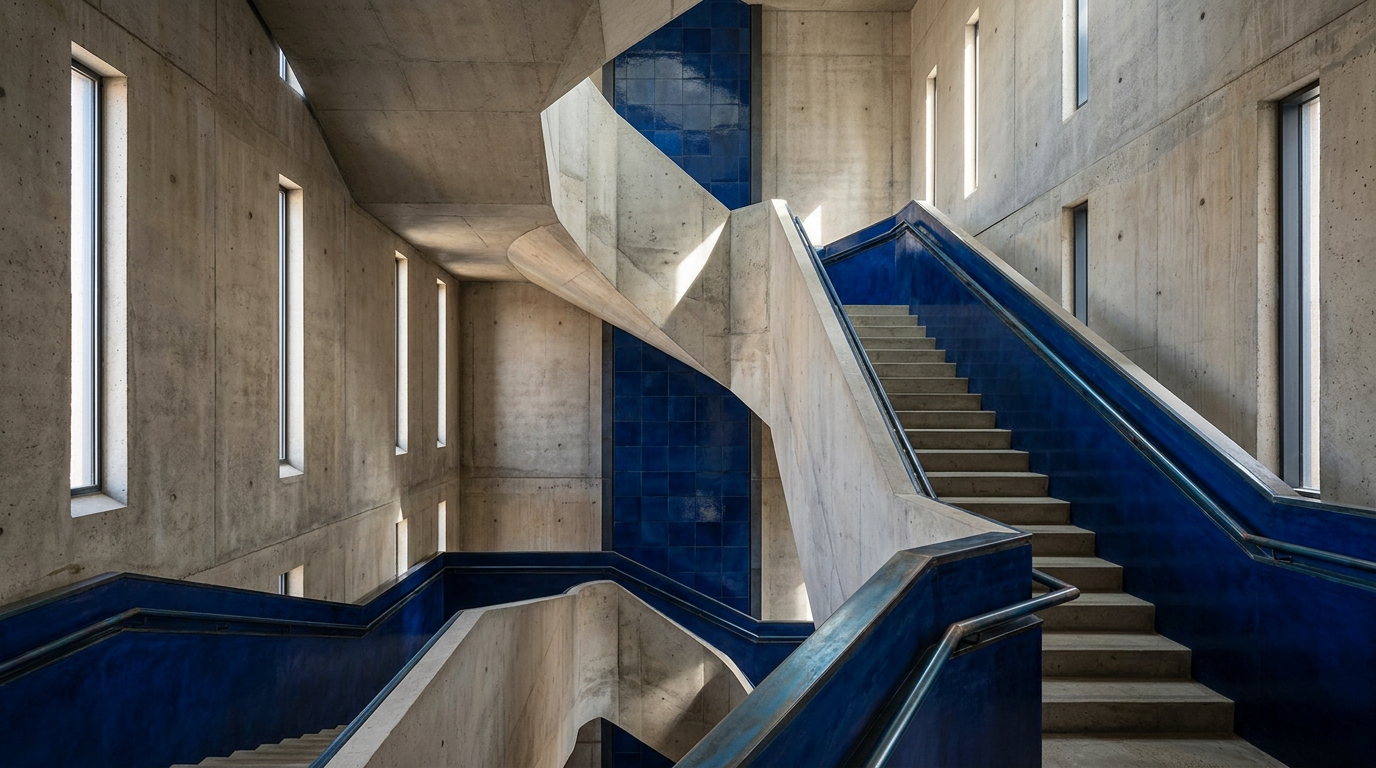
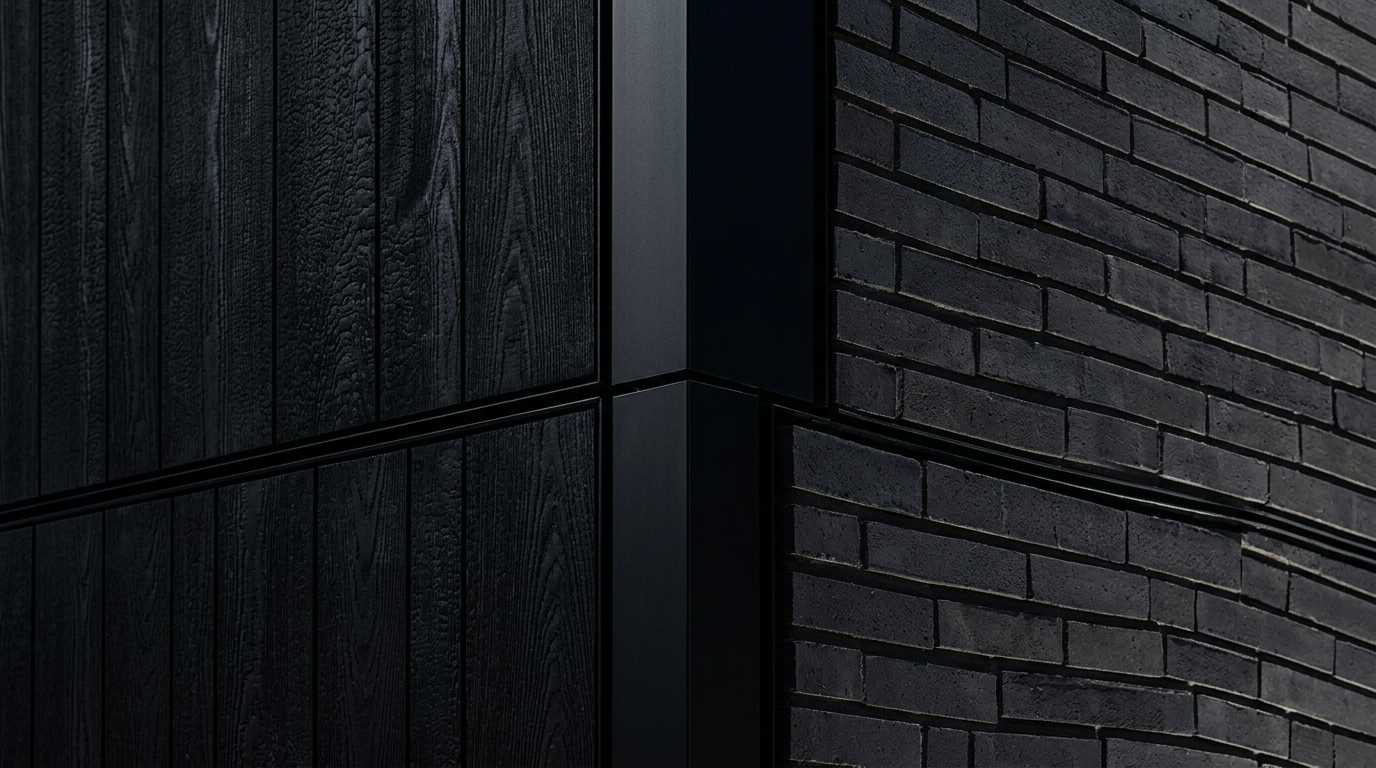
1. Steel structure — Exposed steel beams and columns delineate former operational pathways. Rust-colored surfaces indicate the building’s industrial past. 2. Brick masonry — Weathered red brick walls form the solid enclosures of the complex. Mortar joints show the construction’s utilitarian precision. 3. Concrete thresholds — Rough concrete steps and platforms mark entry points into repurposed spaces. Their worn surfaces speak to decades of use. 4. Grid patterns — Repetitive window grids and structural frames establish a rational order. The industrial aesthetic is maintained through precise articulation. 5. Material patina — Oxidized metal and faded paint create a rich surface texture. These elements reflect the site’s history of production and subsequent re-inhabitation.
Rationalism in Heavy Industry
Completed in 1932, the Zollverein Coal Mine Industrial Complex, specifically Shaft XII, was designed by architects Fritz Schupp and Martin Kremmer. This facility embodied a new industrial architecture, influenced by the functionalist principles prevalent at the Bauhaus. Its design applied a clear, rational grid to massive industrial structures, creating a coherence not typical of earlier collieries. The complex’s distinctive architecture, with its red brick and exposed steel framework, was a departure from purely pragmatic industrial builds, signaling a concern for aesthetic order even in a heavy industry setting.
This systematic planning extended to the internal workings, where coal processing was streamlined through a sequence of interconnected buildings. The Coal Washery, a central element of the complex, became a symbol of this industrial efficiency. Such deliberate organization and visual clarity offered a model for how large-scale infrastructure could contribute to an ordered urban environment, even in its operational phase.
The Circularity of Site: From Extraction to Re-inhabitation
The transformation of Zollverein exemplifies the circular economy within urban architecture. After its closure in 1986, the site avoided demolition, opting instead for a strategy of preservation and adaptive reuse. This approach fundamentally shifts from a linear "take-make-dispose" model to one of extending material life cycles, a key principle of design for disassembly. The existing structures, built with durable materials like steel and brick, possessed inherent resilience, allowing for their re-adaptation rather than complete replacement.
OMA, led by Rem Koolhaas, and Heinrich Böll Associates were instrumental in this reinvention, particularly with the redesign of the former Coal Washery into the Ruhrmuseum. This involved strategic interventions that respected the original fabric while introducing new functions. Elements of the former industrial machinery were either preserved in situ or carefully removed, with new infrastructure integrated to serve contemporary public uses. This careful balance between retention and intervention underscores a commitment to resource efficiency and a reduced environmental footprint, allowing the complex to continue its material and cultural life within Essen.
Urban Fabric and Public Rooms
Zollverein’s transition demonstrates how industrial sites can evolve into significant public spaces. The complex, once a closed operational area, has been opened to the city. Its courtyards, pathways, and re-purposed buildings now serve as "public rooms" that foster community interaction and cultural engagement. The former cokery, for instance, hosts events and exhibitions, while parts of the grounds are landscaped for recreation.
OMA’s master plan for the site, initiated in the early 2000s, emphasized accessibility and public permeability. Rather than treating the complex as an isolated monument, the design integrated it into the surrounding urban fabric through new pedestrian and cycling routes. This strategy acknowledges the importance of continuous flow and connection for successful urban regeneration. The careful placement of cultural institutions, such as the Red Dot Design Museum in the former boiler house and the Folkwang University of the Arts in other repurposed structures, ensures a constant stream of activity, embedding the site deeply into the city’s social and economic life.
ARCHITECTT Note
The Zollverein complex demonstrates how systematic planning, inherent material quality, and a commitment to urban integration can extend the life of monumental industrial structures. Consider how interventions can enhance the original rational grid of a building while introducing new, public-oriented functions.
Closing
The Zollverein Coal Mine Industrial Complex represents a profound shift in architectural thought regarding industrial heritage. It shows that structures built for heavy extraction can be reimagined as centers for culture, education, and public life. This continuous evolution highlights an architectural responsibility to sustainability, urban cohesion, and the enduring value of robust construction.
The project maintains the architectural integrity of its Bauhaus-era industrial design while actively contributing to Essen’s contemporary urban identity. Zollverein serves as a model for cities grappling with the legacy of their industrial past, providing a blueprint for transformation that is both architecturally rigorous and environmentally conscious.
FAQ
What is the Zollverein Coal Mine Industrial Complex?
It is a former large-scale coal mine and coking plant in Essen, Germany, now a UNESCO World Heritage site known for its Bauhaus-influenced industrial architecture and successful adaptive reuse as a cultural and artistic center.
Who designed the original Zollverein complex?
The main architects for Shaft XII, completed in 1932, were Fritz Schupp and Martin Kremmer.
When did Zollverein close as an active coal mine?
The Zollverein Coal Mine ceased operations in 1986.
Who was involved in the adaptive reuse of the Zollverein complex?
Key architectural firms involved in the adaptive reuse from 2001 onwards include OMA (Office for Metropolitan Architecture), led by Rem Koolhaas, and Heinrich Böll Associates.
What is the primary function of the Zollverein complex today?
Today, the complex functions as a cultural and artistic hub, housing museums (like the Ruhrmuseum and Red Dot Design Museum), educational institutions, event spaces, and public recreational areas.
How does Zollverein demonstrate principles of the circular economy?
Zollverein demonstrates circular economy principles by preserving and adaptively reusing existing, durable industrial structures rather than demolishing and rebuilding. This extends the lifespan of materials and infrastructure, reducing waste and embodied carbon.
In Short
The Zollverein Coal Mine Industrial Complex transformed from a Bauhaus-rational colliery into a cultural and urban hub, exemplifying adaptive reuse and circular economy principles.
Key takeaways
- —Zollverein is a UNESCO World Heritage site.
- —It showcases Bauhaus-influenced industrial architecture.
- —The complex was adaptively reused by OMA and Böll Associates.
- —Its transformation highlights circular economy principles.
- —Zollverein functions as a major cultural and public center in Essen.
Sources
- Completed in 1932, the Zollverein Coal Mine Industrial Complex, specifically Shaft XII, was designed by architects Fritz Schupp and Martin Kremmer.https://whc.unesco.org/en/list/975/
- OMA, led by Rem Koolhaas, and Heinrich Böll Associates were instrumental in this reinvention, particularly with the redesign of the former Coal Washery into the Ruhrmuseum.https://www.oma.com/projects/zollverein
- After its closure in 1986, the site avoided demolition, opting instead for a strategy of preservation and adaptive reuse.https://www.zollverein.de/en/unesco-world-heritage-site/history/
- The Red Dot Design Museum in the former boiler house and the Folkwang University of the Arts in other repurposed structureshttps://www.zollverein.de/en/unesco-world-heritage-site/attractions/
Topics
Continue reading