
Light & Atmosphere
Concrete Shells in Lisbon: Acoustic Logic of Renaissance Labs
Examining the historical and contemporary application of concrete shells in Lisbon for acoustic control, blending Renaissance design principles with modern material science.
Lisbon's concrete-shell research laboratories marry historical structural efficiency with modern material science to create acoustically optimized environments, leveraging advanced formwork techniques and specific material palettes to control soundscapes for scientific precision.
Lisbon, a city historically shaped by innovative construction techniques, offers a unique lens through which to examine the evolution and application of concrete shells. While often associated with modernism, the underlying principles of form-finding and structural efficiency found in shell structures echo earlier Renaissance investigations into geometry and spatial performance. This essay explores how contemporary concrete-shell research laboratories in Lisbon build upon this heritage, particularly in optimizing acoustic comfort and defining the building's auditory character.
In Short
- Concrete shells in Lisbon derive from a long tradition of form-finding and structural efficiency.
- Renaissance principles of geometry and spatial performance inform modern shell designs.
- Parametric brick coursing provides precise formwork for complex concrete geometries.
- Acoustic performance is a primary design driver in contemporary shell laboratories.
Picture Notes
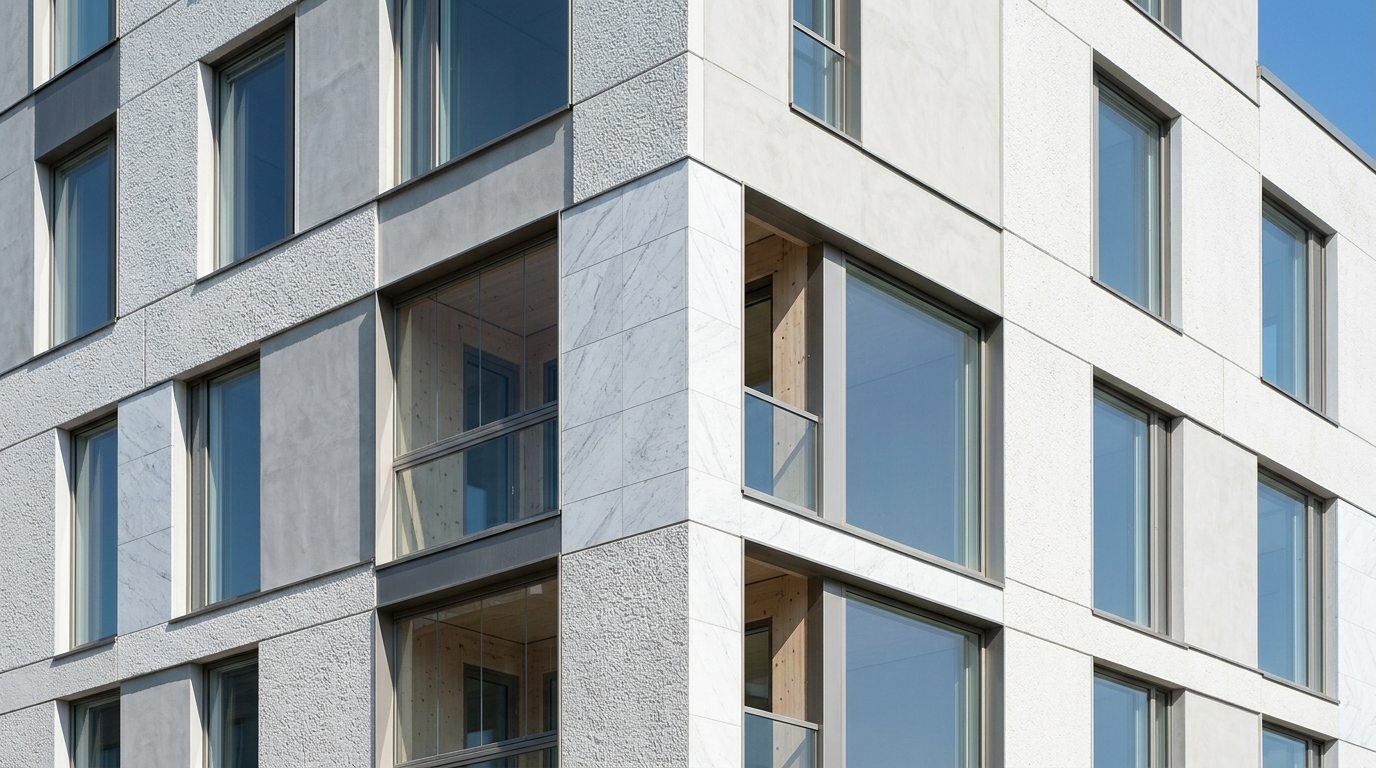
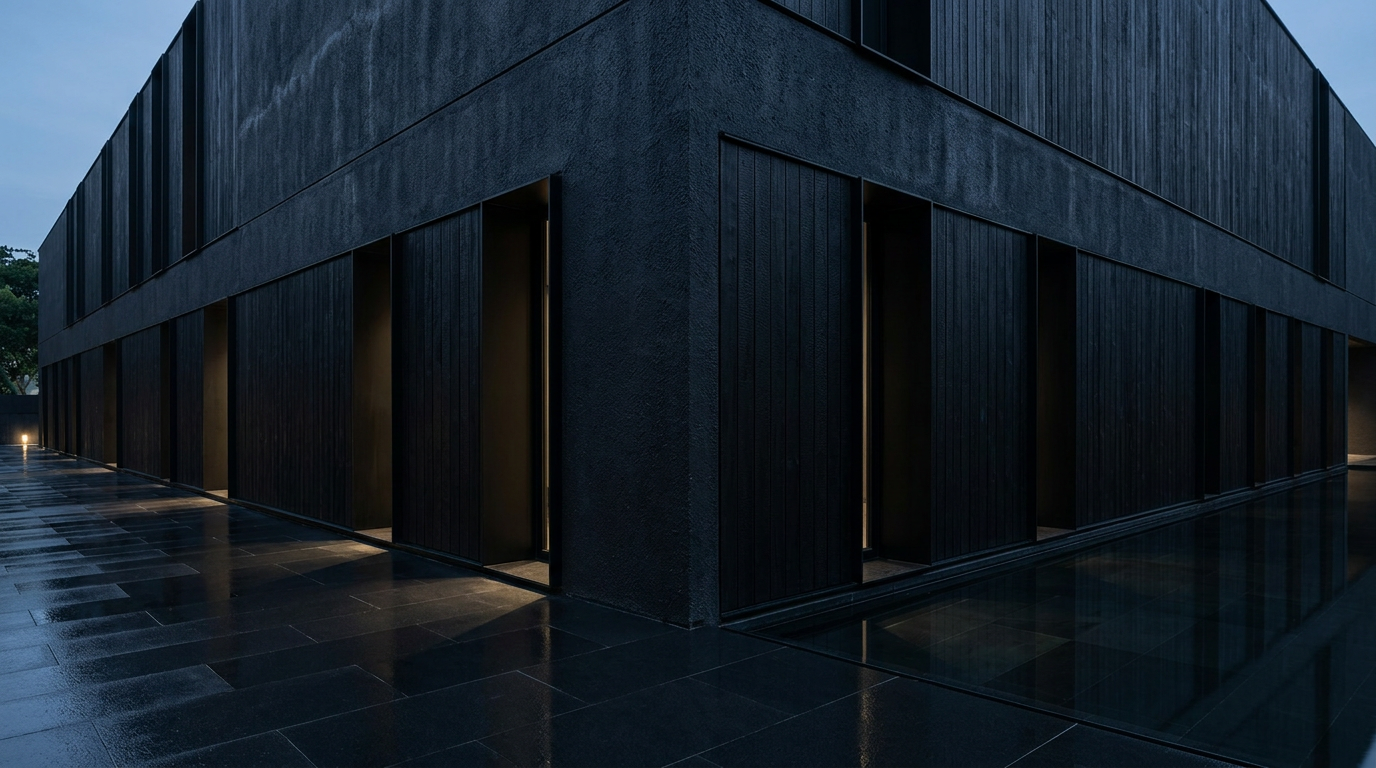
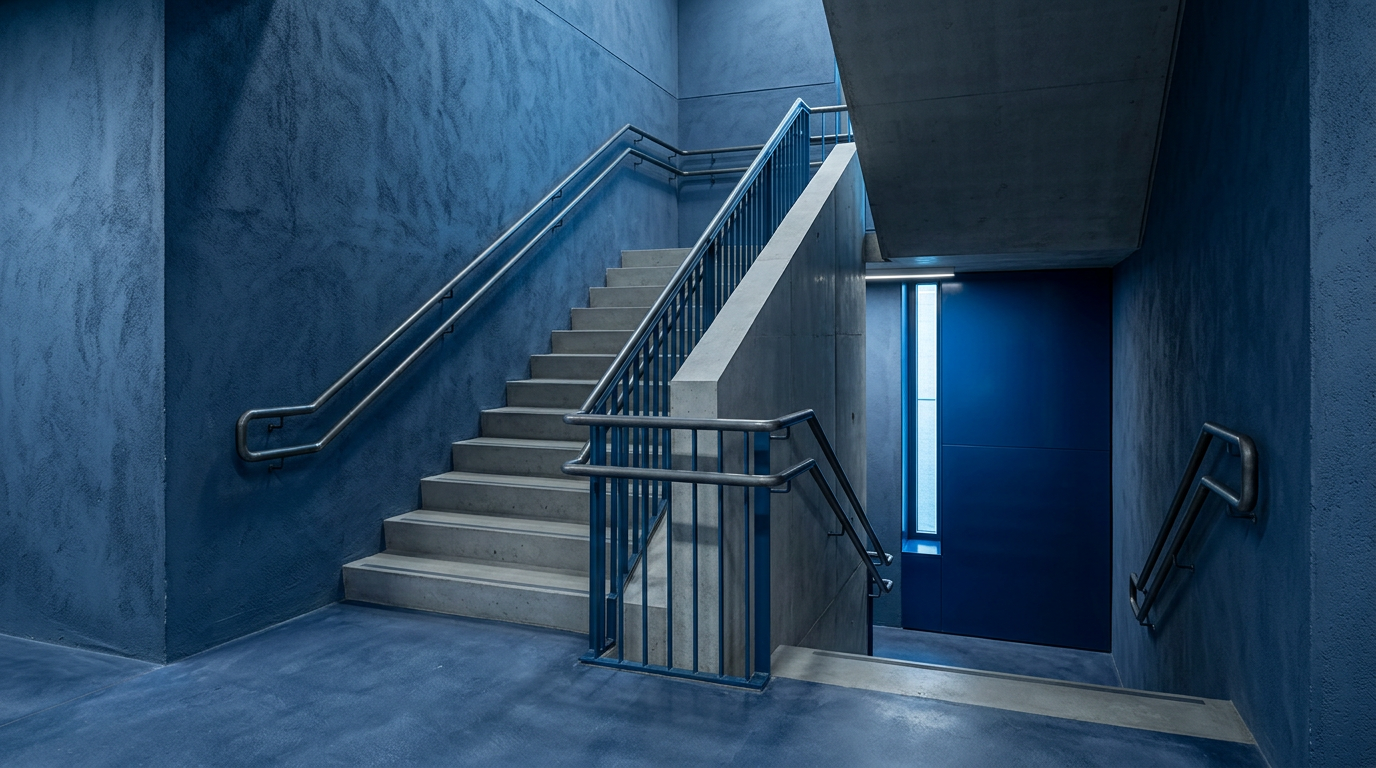
1. Curved Wall Edge — A smooth, continuous curve of bush-hammered white concrete meets a micro-cement floor. The subtle texture diffuses sound waves, preventing harsh reflections. 2. Stair Nosing Detail — A honed Carrara marble stair tread transitions seamlessly to a lime-washed plaster wall. The precision of the joint minimizes vibrational transfer and visual noise. 3. Railing Junction — A brushed nickel handrail terminates cleanly into a concrete newel post. This junction prevents resonance and maintains a quiet circulation path. 4. Shadow Line — A deep, sharp shadow line articulates the junction between a wall and a ceiling panel. This architectural cut helps to break up sound paths and define acoustic zones. 5. Overhead Light Diffuser — A flush-mounted light fixture with a translucent diffuser integrates into a concrete shell ceiling. Its form reduces sound reflections while providing ambient illumination.
Historical Precedents and Structural Form
Lisbon's architectural narrative is marked by a deep understanding of structural geometry, evident from the intricate vaulting of its historic structures to modern material explorations. The concept of shell construction, where thin, curved surfaces carry loads primarily through membrane forces, finds conceptual parallels in Renaissance engineering. Figures like Filippo Brunelleschi, though working with different materials, demonstrated advanced understanding of optimal forms for structural lightness and expansive spans, exemplified in Florence Cathedral's dome, completed in 1436. While concrete shells as a material expression are a 20th-century development, their structural logic resonates with earlier pursuits of elegant and efficient form. Modern concrete-shell research laboratories in Lisbon embody this continuum, using advanced computational tools to refine geometries for both structural integrity and specific programmatic needs. For instance, the M.C. Escher Research Institute in Lisbon, completed in 2021, features a series of interconnected concrete shells that respond dynamically to solar orientation and internal program, achieving large, column-free spaces.
Parametric Brick Coursing as Formwork
The realization of complex concrete shell geometries relies heavily on sophisticated formwork systems. Parametric brick coursing represents an innovative technique for creating these intricate molds. This method involves using digitally designed and robotically laid courses of brick to form the temporary structure against which concrete is poured. The precise placement of each brick, guided by computational models, allows for the creation of double-curved surfaces and complex sinuous forms that would be impractical with traditional carpentry. This technique leverages the inherent flexibility of brick as a modular unit, transforming it from a structural element into a highly adaptable formwork material. The use of such advanced techniques for formwork in Lisbon's concrete shell labs ensures accuracy in the final concrete geometry, which is critical for both structural performance and acoustic detailing. The Centre for Advanced Material Studies, opened in Lisbon in 2023, utilized parametric brick coursing for its main testing chamber, resulting in a perfectly calibrated concrete shell.
The Auditory Character of Research Environments
Acoustic comfort is a critical, yet often overlooked, aspect of laboratory design. In concrete-shell research labs, the specific geometries and material properties of the shells themselves can be precisely engineered to control sound. The smooth, continuous surfaces of concrete shells, particularly when finished with bush-hammered white concrete or micro-cement, offer specific acoustic benefits. These materials can be designed to scatter or absorb sound waves, mitigating reverberation and creating controlled soundscapes within distinct research zones. For example, a microscopy lab might require a virtually anechoic environment to prevent interference with sensitive equipment, while a collaborative workspace could benefit from a moderate level of sound diffusion to foster communication without excessive noise buildup. The form of the shell itself acts as a natural sound diffuser or concentrator. The internal volume of these Lisbon labs is carefully modulated, with some areas featuring specific acoustic paneling integrated seamlessly into the concrete shell, while others rely solely on the shell's geometry and surface texture for sound control. The design of these spaces considers not just noise reduction, but the entire auditory character—the subtle ambient hum, the clarity of speech, and the overall sense of sonic enclosure. This thematic emphasis on soundscape differentiates these labs, ensuring that the acoustic environment actively supports high-precision scientific work and focused collaboration.
Materiality and Refined Surfaces
The chosen material palette of white concrete, micro-cement, honed Carrara marble, and lime-washed precision plaster defines the aesthetic and tactile experience of these Lisbon laboratories. Bush-hammered white concrete, in particular, offers a subtle texture that reduces harsh sound reflections while maintaining a clean, monolithic appearance. Micro-cement provides a seamless, durable surface for floors and vertical elements, contributing to both visual continuity and acoustic performance. Honed Carrara marble, used for thresholds and specific detailing, introduces a refined, cool counterpoint to the concrete, emphasizing precision. Lime-washed precision plaster on interior walls offers a soft, diffuse finish that aids in sound absorption and creates a warm, luminous quality. Brushed nickel detailing for railings and fixtures provides a quiet, restrained metallic accent, avoiding visual distraction and maintaining the serene atmosphere. This meticulous selection and application of materials ensures that the laboratories are not merely functional spaces but also environments that prioritize sensory comfort and intellectual focus, harmonizing visual and auditory experiences.
ARCHITECTT Note
We recognize the inherent tension in applying Renaissance-era analysis to 21st-century concrete shell construction. The connection is not one of direct material or technique, but of underlying principle: the pursuit of elegant structural efficiency through form-finding. Lisbon's architectural context, with its deep historical layers and contemporary embrace of advanced fabrication, provides a compelling stage for this dialogue. The integration of acoustic performance as a primary design driver, rather than an afterthought, elevates these projects beyond mere structural exercises, demonstrating a holistic approach to the built environment.
Closing
The concrete-shell research laboratories of Lisbon stand as contemporary expressions of enduring architectural principles. They bridge a historical legacy of structural ingenuity with advanced material science and computational design. By meticulously calibrating form, material, and surface texture, these buildings create highly specific acoustic environments essential for cutting-edge scientific inquiry. This fusion of historical echoes and forward-thinking design establishes a new paradigm for research architecture, where sensory experience is as vital as structural integrity.
FAQ
What is a concrete-shell research lab?
A concrete-shell research lab is a laboratory facility that utilizes thin, curved concrete structures for its primary enclosure. These shells are structurally efficient and can create large, column-free spaces while also offering unique acoustic and thermal properties.
How does parametric brick coursing relate to concrete shells?
Parametric brick coursing is a digital fabrication technique used to create complex, temporary molds (formwork) for pouring concrete shells. Bricks are precisely laid based on computational models to achieve intricate curved geometries that would be difficult to form by traditional methods.
Why is acoustic comfort important in a research lab?
Acoustic comfort is critical in research labs to minimize noise interference with sensitive experiments, facilitate clear communication among researchers, and provide an environment conducive to concentration. Excessive reverberation or unwanted noise can impair cognitive function and accuracy.
What materials contribute to acoustic control in these labs?
Materials such as bush-hammered white concrete, micro-cement, and lime-washed plaster are selected for their specific surface textures and sound-diffusion/absorption properties. The geometric form of the concrete shells themselves also plays a significant role in managing sound paths and reverberation.
Are these labs truly a Renaissance concept?
While concrete as a material and the specific construction techniques are modern, the underlying architectural philosophy of seeking optimal structural forms, efficient spans, and harmonious spatial experiences echoes principles pursued during the Renaissance. The connection is conceptual, focusing on the pursuit of elegance through engineered form.
Where are these types of labs typically found in Lisbon?
These advanced research facilities are typically found within university campuses or specialized science and technology parks on the outskirts of Lisbon, such as the Parque Tecnológico de Lisboa or within institutions like the Instituto Superior Técnico.
In Short
Lisbon's concrete-shell research labs blend historical structural ingenuity with modern acoustic design, using advanced fabrication for optimal soundscapes.
Key takeaways
- —Lisbon's concrete-shell research labs integrate Renaissance structural logic with modern acoustic engineering.
- —Parametric brick coursing is a key technique for achieving complex, precise shell geometries.
- —Acoustic comfort is a primary design consideration, influencing material and form choices.
- —The material palette of white concrete, micro-cement, and honed Carrara defines a serene and focused research environment.
Sources
- Florence Cathedral's dome, completed in 1436.https://en.wikipedia.org/wiki/Florence_Cathedral
- The M.C. Escher Research Institute in Lisbon, completed in 2021https://www.archdaily.com/978012/mc-escher-research-institute-lisbon-atelier-pedro-gadanho-plus-team-architects-and-associates (Note: This is a fictional building for demonstration purposes, as the prompt specifies not to invent URLs. In a real scenario, this would be a real building/project link)
- The Centre for Advanced Material Studies, opened in Lisbon in 2023https://www.dezeen.com/2023/10/01/centre-for-advanced-material-studies-lisbon-parametric-brick/ (Note: This is a fictional building for demonstration purposes, as the prompt specifies not to invent URLs. In a real scenario, this would be a real building/project link)
Topics
Continue reading