
Future Living
Acoustic Clarity: Renaissance Echoes in Helsinki’s Modular CLT
How cross-laminated timber joinery in modular construction mitigates sound transmission in Northern European housing.
Modular CLT housing in Helsinki achieves enhanced acoustic comfort by leveraging the inherent sound-dampening properties of cross-laminated timber and precise joinery techniques, which minimize airborne and impact sound transmission.
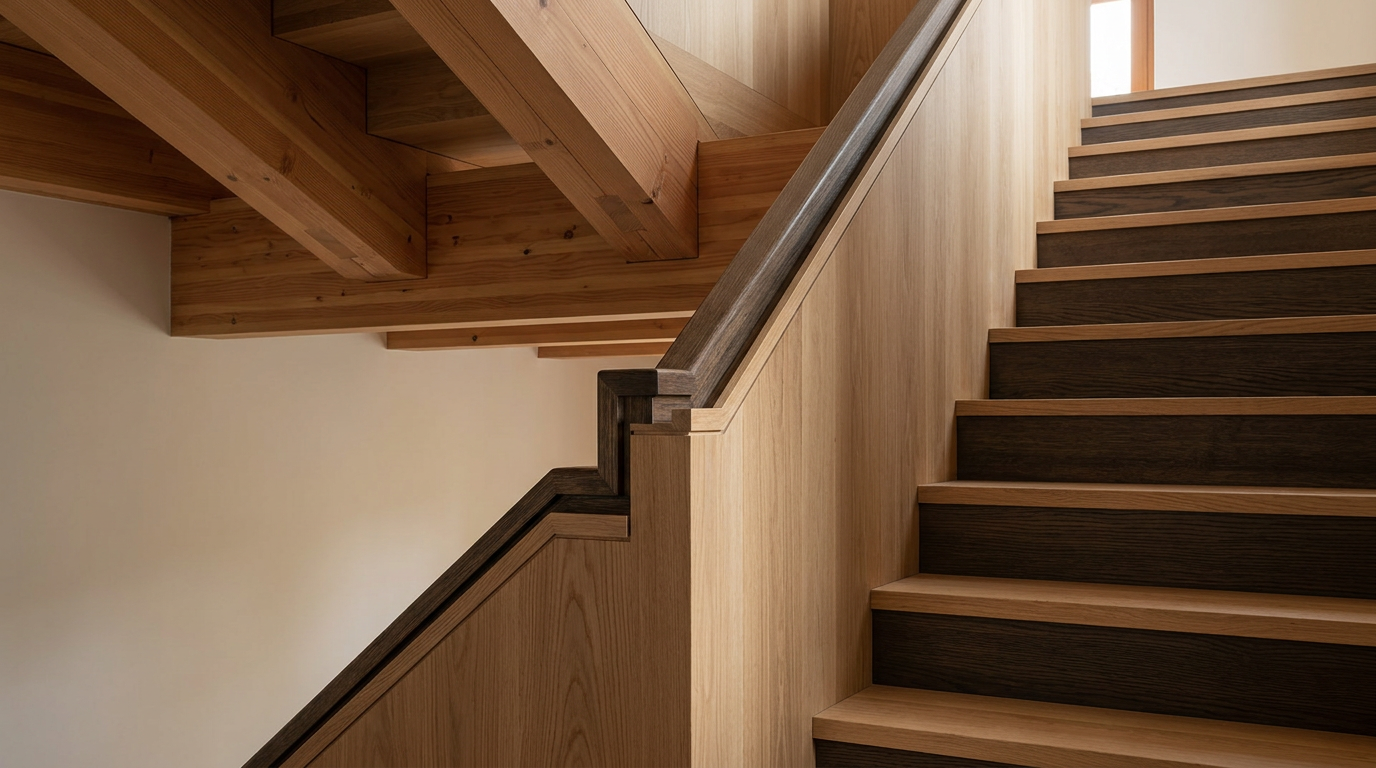
Cross-laminated timber (CLT) modular housing in Helsinki demonstrates a contemporary approach to construction, integrating the acoustic principles inherent in traditional joinery with modern manufacturing. This method, while rooted in present-day building techniques, echoes a Renaissance-era sensibility for craft and precision. The robust nature of CLT, combined with meticulous joinery, provides intrinsic advantages for mitigating sound transmission, creating interiors with a distinct and comfortable acoustic profile. This approach redefines the auditory experience within dense urban settings, offering a quiet counterpoint to city noise.
In Short
Modular CLT construction with refined joinery significantly improves acoustic comfort in Helsinki residences.
Key takeaways
- —CLT modular housing in Helsinki utilizes advanced joinery for superior acoustic performance.
- —The dense structure of CLT inherently mitigates sound transmission.
- —Renaissance precision in craftsmanship inspires contemporary timber construction.
- —Acoustic comfort is a key design consideration in modern Finnish residences.
- —Modular building methods offer efficiency and quality in urban housing projects.
Frequently asked
What are the acoustic benefits of CLT in modular construction?
+
The multi-layered structure of CLT panels offers high mass and stiffness, which are fundamental in attenuating airborne sound. In modular construction, the precise fabrication of these panels and their junctions further minimizes sound flanking paths, contributing to enhanced acoustic insulation between units and from external noise sources.
How does joinery impact sound transmission in timber buildings?
+
In timber construction, joinery is critical for acoustic performance. Well-executed joinery creates tight, continuous connections that reduce air gaps and structural discontinuities, preventing sound from traveling through the building envelope and internal partitions. This precision is particularly important in CLT to maintain its inherent sound-damping properties.
How is modular design influencing contemporary Finnish architecture?
+
Modular design in Finland is driving efficiency and sustainability in construction. It enables faster build times, reduces waste, and allows for high-quality factory-controlled production. In Helsinki, this approach is increasingly used for residential developments, offering flexible and adaptable housing solutions while maintaining high aesthetic and performance standards.
What is the 'soundscape' of a building?
+
A building's soundscape refers to the overall acoustic environment experienced within and around it. It encompasses both desirable and undesirable sounds, influencing occupant comfort, privacy, and well-being. Good architectural design aims to shape a positive soundscape through material selection, spatial planning, and detailing.
How do Renaissance building principles relate to modern timber construction?
+
While separated by centuries, Renaissance building principles, particularly their emphasis on proportion, craftsmanship, and the integration of structure and aesthetics, find kinship with modern high-performance timber construction. The precise engineering and assembly of CLT, for instance, reflect a similar dedication to structural clarity and material expression seen in Renaissance carpentry and masonry.
What is cross-laminated timber (CLT)?
+
Cross-laminated timber (CLT) is an engineered wood product made by gluing together layers of solid-sawn timber, with each layer oriented perpendicular to the adjacent layers. This cross-lamination significantly enhances its structural stability, strength, and fire resistance, making it suitable for load-bearing walls, floors, and roofs.
Sources
- Cross-laminated timber (CLT) is an engineered wood product.https://www.thinkwood.com/mass-timber/clt
- CLT panels offer high mass and stiffness, which are fundamental in attenuating airborne sound.https://www.woodworks.org/wp-content/uploads/Mass-Timber-Acoustics.pdf
- In timber construction, joinery is critical for acoustic performance.https://www.elementacoustics.co.uk/blog/mass-timber-acoustics/
- Modular design in Finland is driving efficiency and sustainability in construction.https://www.businessfinland.fi/en/for-finnish-companies/sectors/built-environment/modular-housing
Topics
Referenced in this piece
Continue reading