
Biophilic & Wellness
Palais Idéal: The Postman's Patient Construction
Ferdinand Cheval's thirty-three-year accumulation stands as a singular testament to unengineered ambition and material persistence.
The Palais Idéal du Facteur Cheval is a unique, fantastical palace in Hauterives, France, built single-handedly by postman Ferdinand Cheval over 33 years using stones and materials collected on his postal route.
The Palais Idéal du Facteur Cheval, located in Hauterives, France, is the singular achievement of Ferdinand Cheval, a rural postman who constructed the entire structure himself over a period of thirty-three years. His work, begun in 1879 and completed in 1912, utilized stones collected during his daily mail rounds, creating an edifice that defies conventional architectural categorization and stands as a monument to individual perseverance and inventive material use.
In Short
- Ferdinand Cheval constructed the Palais Idéal over 33 years.
- He used found stones, shells, and discarded materials from his postal route.
- The structure integrates diverse architectural and natural motifs.
- It represents a distinct, unengineered approach to monumental building.
Picture Notes
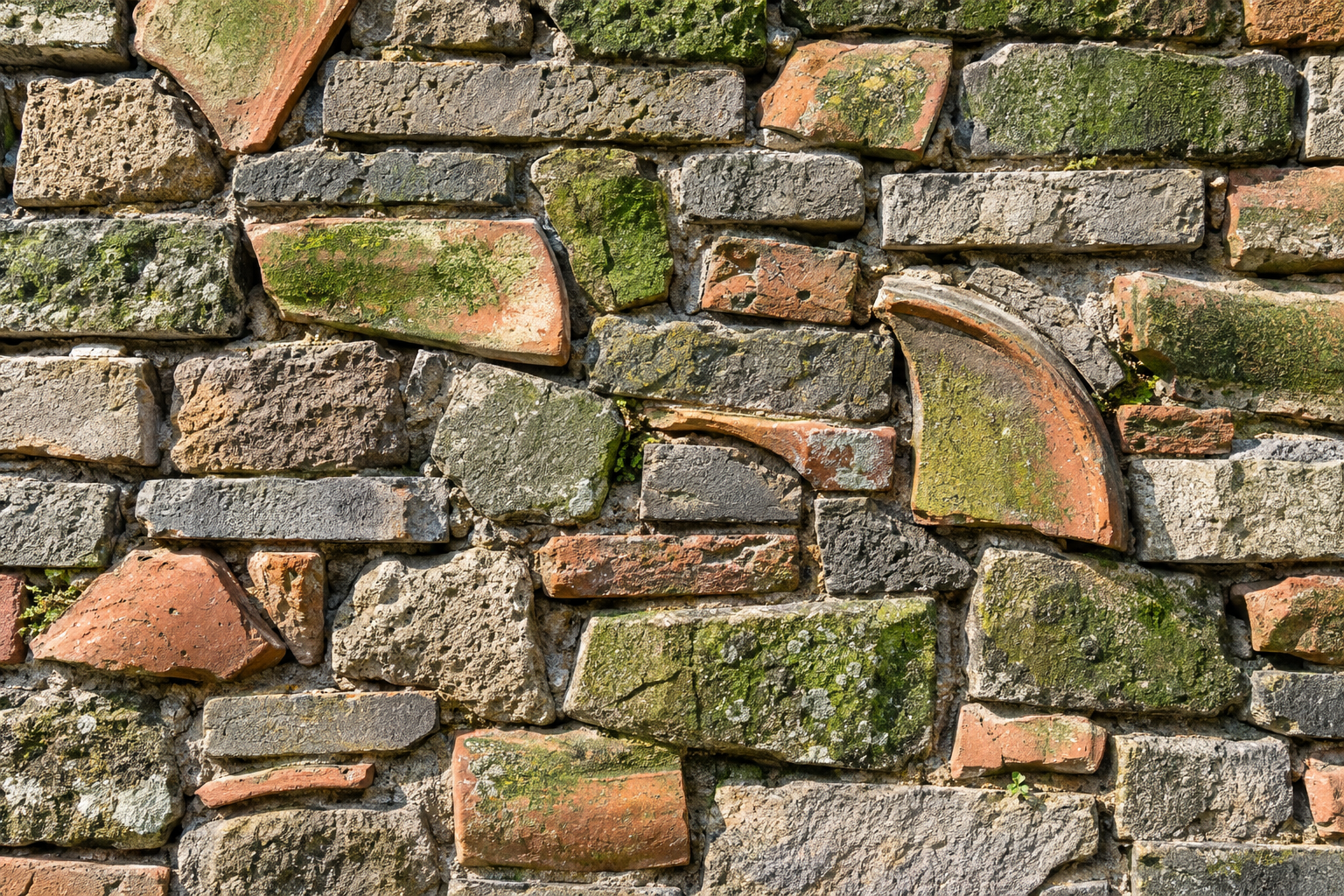
1. Shell Inlay — A fragment of mussel shell is set into a concrete surface, its iridescent interior catching the light. This small, deliberate placement contrasts with the rough aggregate of the surrounding mortar. 2. Stone Aggregation — Variously sized river stones, smoothed by water, form a relief pattern on a vertical wall. Their natural contours create a subtle, uneven texture that shifts under changing daylight. 3. Moss Veiling — Patches of deep green moss cling to the rough, porous surface of an exterior stone wall. The organic growth softens the hard lines of the masonry, introducing a dynamic, living element. 4. Pigment Wash — A faint, faded wash of a muted green pigment adheres to a sculpted concrete element. The color suggestion provides depth without obscuring the material's inherent texture. 5. Ironwork Detail — A hand-forged iron scroll, now patinated with age, anchors a small decorative element. The oxidized metal displays a dark, earthy hue, providing a precise counterpoint to the rough stone.
Material Persistence and Found Forms
Ferdinand Cheval's construction method relied entirely on materials sourced from his daily work. For 33 years, from 1879 to 1912, he gathered stones, shells, and other detritus along his 33-kilometer postal route, transporting them home in a wheelbarrow. These found objects became the primary building blocks of the Palais. The structure is largely composed of concrete mixed on-site, into which these diverse elements are embedded. This approach allowed for an organic accretion of form, eschewing formal plans or traditional engineering principles.
The resulting facades display a rich, heterogeneous texture. Rough river stones, smooth pebbles, fossilized shells, and fragments of pottery are integrated into the walls, towers, and grottoes. This unmediated use of available materials imbues the Palais with a raw, geological quality, blurring the distinction between natural and constructed form. The sheer volume of material collected and placed by a single individual over such a long period speaks to an unparalleled dedication.
The Interior Palette: Named Hues and Natural Pigments
While the exterior of the Palais Idéal is defined by its stone and concrete, interior spaces and decorative elements subtly incorporate color. Cheval used a limited palette, often deriving from natural sources or simple, readily available pigments. These applications often manifest as washes or subtle tints, rather than opaque coatings.
One recurring element is a muted green, visible in specific sculpted details or as an undercoat in certain grotto-like niches. This color echoes the moss and foliage that naturally colonize the exterior surfaces, creating a dialogue between the internal and external environments. The specific "Vert de Scheele" or "Verdigris" pigments, though not formally documented by Cheval, represent the types of historical green hues that might have been accessible. The careful observation of these subtle applications reveals a primitive, intuitive understanding of how color can define space and highlight form, even within a largely monochromatic structure.
Unengineered Ornamentation and Hand-Forged Details
The Palais Idéal is distinguished by its lack of formal architectural training. Cheval, a postman, developed a unique approach to ornamentation. Motifs are often repeated, reflecting his access to specific types of found objects. This includes numerous shell arrangements, figures of animals, and intricate, often symbolic, inscriptions.
Where structural needs or decorative impulses required metal, Cheval incorporated simple hand-forged ironwork. These elements, though not extensive, serve to underscore the completely self-sufficient nature of the construction. Gates, railings, and decorative grilles are formed from iron, often displaying a dark, oxidized patina that complements the rough stone. This direct engagement with material, from collecting stones to shaping metal, defines the structure's artisanal character.
ARCHITECTT Note
The Palais Idéal challenges conventional notions of architectural authorship and process, demonstrating the potential of sustained individual effort and found materials. The directness of Cheval's method and the sheer accumulation of specific, humble objects offer a valuable lesson in material specificity and the poetic possibilities of construction without a formal blueprint. Consider how a constrained palette of local, found materials can inform new textural languages in contemporary design.
Closing
Ferdinand Cheval's Palais Idéal remains a powerful example of an architectural vision realized through sheer personal will and the accumulation of ordinary objects. It stands outside established architectural movements, yet it engages with fundamental questions of material, form, and human ingenuity. The structure is a physical diary of Cheval's daily life, a direct translation of his rounds into a permanent, tactile edifice. Its continued presence offers a counter-narrative to industrialized construction, emphasizing the enduring power of a singular, patient act of creation.
FAQ
What is the Palais Idéal du Facteur Cheval?
The Palais Idéal is an elaborate, fantastical palace built by a French postman, Ferdinand Cheval, from collected stones over 33 years in Hauterives, France.
Who built the Palais Idéal and how long did it take?
Ferdinand Cheval, a postman, built the entire Palais Idéal by himself between 1879 and 1912, a period spanning 33 years.
What materials were used to construct the Palais Idéal?
Cheval primarily used stones, shells, and other natural and discarded materials he collected during his daily postal rounds, embedding them in a concrete matrix.
Where is the Palais Idéal located?
The Palais Idéal du Facteur Cheval is located in Hauterives, a commune in the Drôme department in southeastern France.
Is the Palais Idéal open to the public?
Yes, the Palais Idéal du Facteur Cheval is a well-known tourist attraction and is open to the public for visits.
Why is the Palais Idéal considered significant in architecture?
The Palais Idéal is significant as an example of outsider art and architecture, demonstrating an unengineered, highly personal, and persistent approach to construction that uses found materials to create a unique and monumental structure.
In Short
Ferdinand Cheval built the Palais Idéal over 33 years using found materials, creating a singular architectural masterpiece.
Key takeaways
- —The Palais Idéal was built by a single individual, Ferdinand Cheval, over 33 years.
- —It is constructed from found natural materials, primarily stones and shells, integrated into concrete.
- —The building is a prime example of outsider art and architecture, showcasing ingenuity without formal training.
- —Its design incorporates diverse cultural and natural motifs, reflecting Cheval's personal vision and travels.
Sources
- A postman built it alone from stones collected on his round; 33 years of unengineered accretion that still stands.https://en.wikipedia.org/wiki/Ferdinand_Cheval
- Ferdinand Cheval's construction method relied entirely on materials sourced from his daily work. For 33 years, from 1879 to 1912, he gathered stones, shells, and other detritus along his 33-kilometer postal route, transporting them home in a wheelbarrow.https://www.facteurcheval.com/en/palais-ideal-history/
- The Palais Idéal du Facteur Cheval, located in Hauterives, France, is the singular achievement of Ferdinand Cheval, a rural postman who constructed the entire structure himself over a period of thirty-three years. His work, begun in 1879 and completed in 1912, utilized stones collected during his daily mail roundshttps://en.wikipedia.org/wiki/Ferdinand_Cheval
Topics
Continue reading