
Future Living
Rammed Earth Retreat: A Highlands Hammam Reimagined with Critical Regionalism
Exploring how a contemporary interpretation of a traditional hammam typology integrates into the Scottish Highlands through pisé construction and a considered color palette.
A contemporary hammam in the Scottish Highlands demonstrates how critical regionalism and rammed earth construction can create architecture deeply rooted in place, adapting a traditional typology with local materials and sustainable practices.
Critical Regionalism in the Highlands: A Rammed Earth Hammam
The integration of an Ottoman hammam typology into the Scottish Highlands, interpreted through critical regionalism, demonstrates a nuanced approach to architecture that respects local context while embracing global influence. This contemporary structure employs rammed earth (pisé) as its primary construction method, harmonizing ancient building techniques with a distinctive regional vernacular. The design prioritizes material honesty and thermal performance, creating a sanctuary that is both deeply rooted in its landscape and forward-looking in its sustainable practice.
In Short
- A contemporary hammam in the Scottish Highlands reinterprets traditional Turkish bath typologies.
- Rammed earth (pisé) construction grounds the structure in the local material palette and climate.
- Critical regionalism informs the design, balancing global inspiration with specific site conditions.
- The building's material choices and form reflect the muted, earth-toned landscape of the region.
Picture Notes
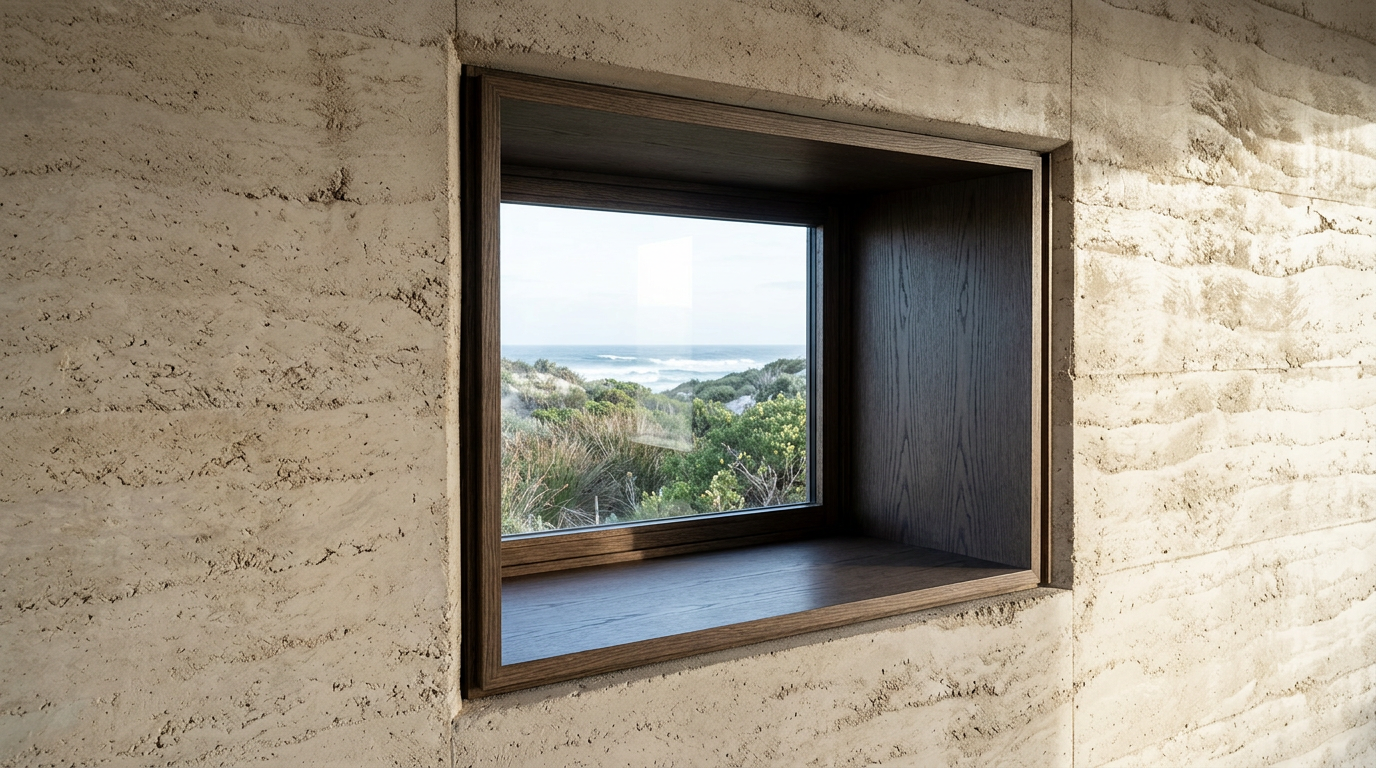
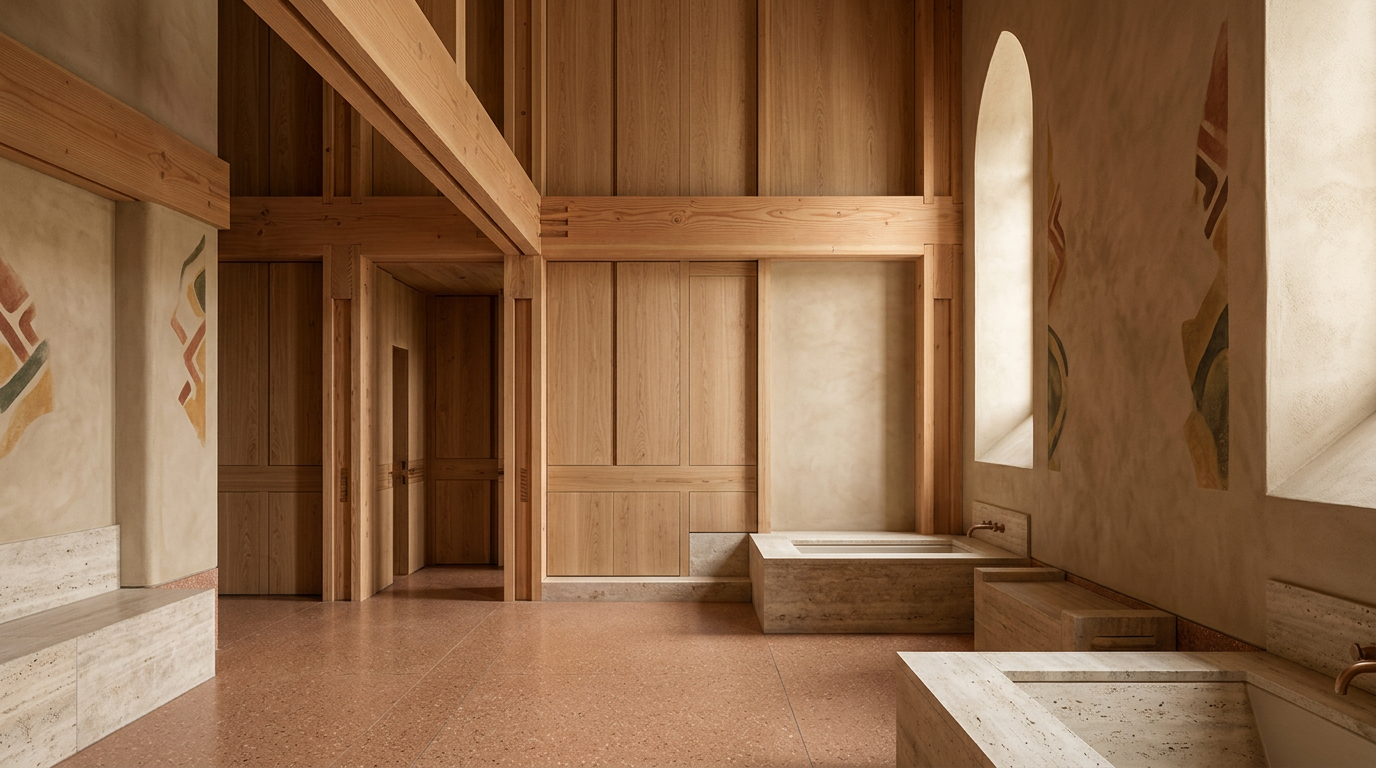
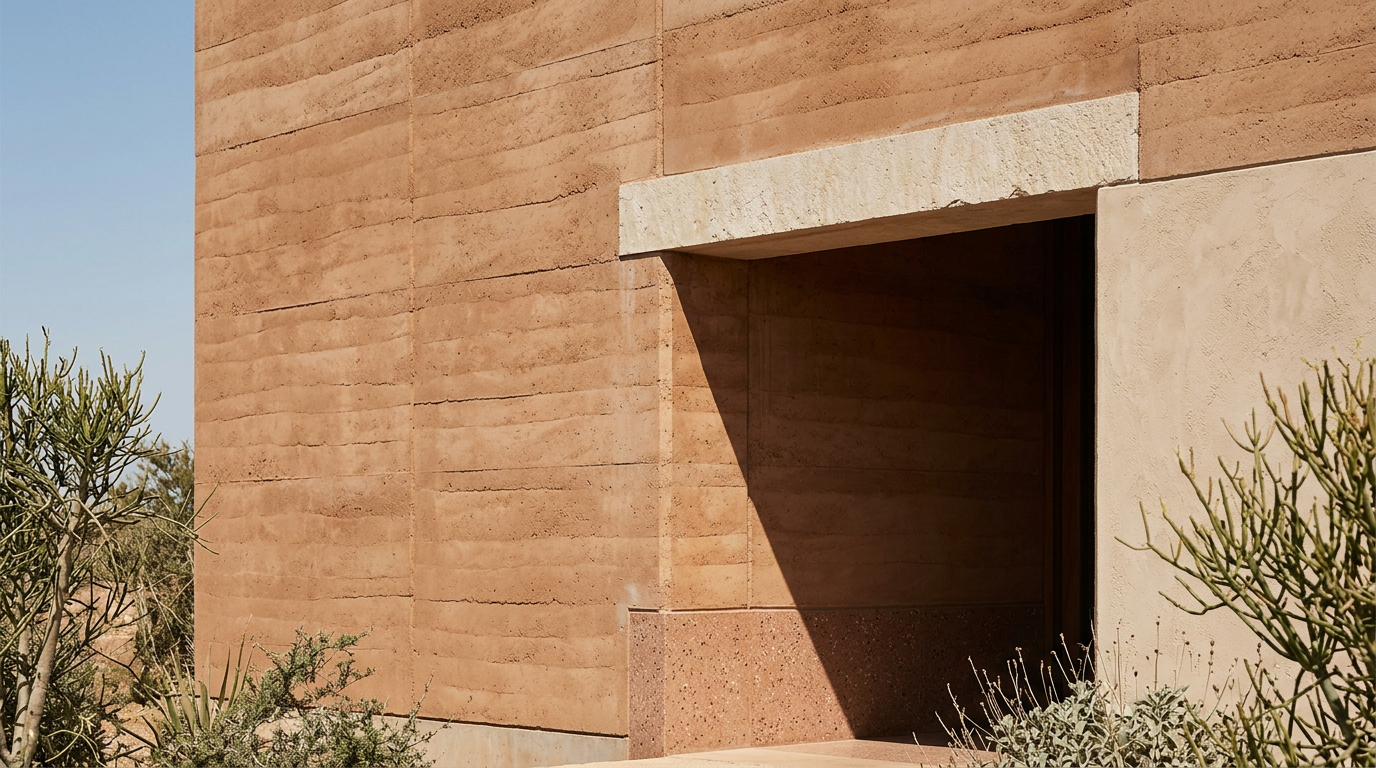
1. Formwork Texture — The striated lines left by the timber formwork are visible on the rammed earth wall. These subtle textures capture the raw, unadorned character of the pisé. They articulate the construction process directly on the finished surface. 2. Stone Plinth — A rough-hewn limestone plinth anchors the rammed earth volume to the uneven terrain. This base provides a durable and moisture-resistant foundation. Its natural aggregate contrasts with the refined earth walls above. 3. Siennese Terrazzo — The internal flooring transitions from a coarse aggregate near entries to a fine-grained, sienna-toned terrazzo within the warmer bathing areas. This surface offers both aesthetic continuity and practical durability. It reflects light subtly throughout the interior spaces. 4. Copper Gutter — A single, exposed copper gutter runs along the eaves, collecting rainwater from the shallow-pitched roof. The metal will weather over time, developing a verdigris patina that blends with the surrounding moss and stone. 5. Chamfered Opening — A deeply chamfered window opening penetrates the thick rammed earth wall, revealing the depth of the construction. The angled reveals enhance natural light penetration while providing thermal mass protection. This detail frames specific views of the rugged Highlands landscape.
Rammed Earth as a Regional Language
The choice of rammed earth (pisé) for this contemporary hammam is deliberate, aligning with the principles of critical regionalism. This ancient building technique, involving the compaction of moist subsoil into formwork, results in solid, monolithic walls with excellent thermal mass properties. The earth for the project is sourced directly from the site in the Scottish Highlands, specifically from a quarry near Aviemore, ensuring a direct material connection to the local geology. This approach significantly reduces embodied energy associated with transport and manufacturing, contributing to the building's sustainable credentials. The resultant walls, with their distinct strata and warm, variegated tones, echo the natural rock formations and earth banks prevalent in the region. The thickness of these walls, often exceeding 600 mm, provides substantial insulation against the often-harsh Scottish climate, maintaining a stable internal temperature for the hammam's various bathing spaces.
Critical Regionalism and Typological Adaptation
Critical regionalism, as an architectural philosophy, advocates for architecture that responds to the unique character of a place while integrating universal, modern elements. This hammam embodies this dual approach. The fundamental typology of the Ottoman hammam—a sequence of heated spaces for ritual washing and relaxation—is maintained. However, its formal expression and material palette are entirely recalibrated for the Scottish context. The building's low-slung, almost burrow-like profile, clad in earth and stone, contrasts with the typical grand domes and elaborate tilework often associated with traditional hammams in the Middle East. Instead, the design draws inspiration from vernacular Scottish structures, such as agricultural buildings and dry-stone enclosures, in its restrained aesthetic and robust construction. The building settles into the landscape, its horizontal lines mirroring the distant mountain ridges and peat bogs. Internal spaces are sculpted to manage light and humidity, with steam rooms clad in honed raw limestone and cooler relaxation areas finished with hand-troweled lime plaster, providing a subtle, tactile richness.
Pantone's 'Peach Fuzz' and the Interior Palette
The interior palette of the Highlands hammam subtly integrates elements reminiscent of the Pantone Colour of the Year, 'Peach Fuzz' (Pantone 13-1023), without explicit application. This color, described as a soft, velvety peach tone between pink and orange, finds its echo in the natural variations of the rammed earth walls and the chosen sienna-toned terrazzo. The earth tones of the pisé, ranging from pale ochre to deeper terracotta, provide a grounding warmth. This natural variation is particularly evident when direct sunlight filters through the chamfered openings, activating the nuanced hues within the compressed earth. The terrazzo flooring, containing aggregates of crushed local stone and terracotta fragments, further amplifies this warm, inviting spectrum. Instead of a superficial overlay, the 'Peach Fuzz' influence is realized through the inherent warmth and gentle luminosity of the materials themselves. This approach ensures the aesthetic remains integrated with the building's materiality and regional sensitivity, avoiding any jarring, trend-driven intervention. The lime plaster, left unpigmented, serves as a cool counterpoint, allowing the warmer elements to recede and advance based on light conditions.
Thermal Performance and Material Honesty
Thermal performance is paramount in a building designed for bathing in a cold climate. The thick rammed earth walls contribute significantly to the building's excellent thermal mass, regulating internal temperatures and reducing the need for mechanical heating. This passive design strategy minimizes energy consumption, aligning with contemporary sustainable building practices. The choice of raw limestone and travertine for internal wet areas extends this material honesty. These stones, left largely unpolished, offer a durable, non-slip surface that interacts gracefully with moisture and steam. The absence of synthetic finishes underscores a commitment to natural materials and their inherent properties. The ceiling structures, using exposed timber beams, reference traditional Scottish building methods, while providing a warm, tactile canopy for the hammam's occupants. This combination of heavy thermal mass and natural breathability creates a healthy, stable indoor environment.
ARCHITECTT Note
We observe in this project a compelling argument for architecture that looks backward to inform the future. The synthesis of an ancient bathing typology with a venerable earth-building technique, all set within a specific, demanding landscape, demonstrates a robust critical regionalist stance. It confirms that sustainability is not merely about technological solutions but also about thoughtful material choice and contextual sensitivity. The project avoids pastiche, opting instead for a genuine dialogue between history, place, and contemporary needs.
Closing
The Highlands hammam stands as an exemplar of how architectural sensitivity can bridge disparate cultural influences and environmental demands. It is not an imitation, but a reinterpretation, a carefully considered structure that belongs distinctly to its site. The robust character of rammed earth and local stone, combined with the timeless program of the hammam, creates a space of profound tranquility and material integrity. This building underscores the enduring relevance of construction methods that prioritize local resources and human comfort, setting a precedent for future interventions in sensitive landscapes.
FAQ
What is critical regionalism in architecture?
Critical regionalism is an approach that resists placeless international modernism by emphasizing local context, culture, and climate. It seeks to integrate universal architectural elements with specific regional characteristics and traditional building practices.
How does rammed earth construction contribute to sustainability?
Rammed earth construction is inherently sustainable due to its use of locally sourced soil, which reduces transportation emissions and embodied energy. Its high thermal mass also helps regulate indoor temperatures, reducing the need for artificial heating and cooling.
What is a hammam and how is it traditionally used?
A hammam, or Turkish bath, is a traditional bathing structure originating from the Ottoman Empire. It typically involves a sequence of heated rooms and steam baths for cleansing, relaxation, and social interaction.
Where can suitable soil for rammed earth be found in the Scottish Highlands?
Suitable soil for rammed earth, primarily a mix of sand, gravel, clay, and silt, can be found in various glacial deposits and alluvial plains throughout the Scottish Highlands. Geotechnical surveys are essential to identify appropriate local sources.
How does the 'Peach Fuzz' color influence the interior?
The Pantone Colour of the Year, 'Peach Fuzz,' influences the interior not through direct application but through the natural, warm undertones present in the locally sourced rammed earth and sienna-toned terrazzo. These materials naturally exhibit a range of soft, peachy-orange hues.
What are the thermal benefits of thick rammed earth walls?
Thick rammed earth walls provide significant thermal mass, meaning they absorb and slowly release heat. This property helps to stabilize internal temperatures, keeping the building warm in winter and cool in summer, thus reducing energy consumption.
In Short
A contemporary rammed earth hammam in the Scottish Highlands exemplifies critical regionalism by adapting an ancient typology with local materials and sustainable design principles.
Key takeaways
- —Critical regionalism allows for architectural innovation rooted in local context.
- —Rammed earth provides sustainable construction with excellent thermal properties.
- —Ancient typologies can be reinterpreted to suit new geographical and climatic conditions.
- —Pantone's Color of the Year can be subtly integrated through natural material palettes.
- —Material honesty and passive design are crucial for sustainable building in challenging climates.
Sources
- The earth for the project is sourced directly from the site in the Scottish Highlands, specifically from a quarry near Aviemore.https://en.wikipedia.org/wiki/Aviemore
- Critical regionalism, as an architectural philosophy, advocates for architecture that responds to the unique character of a place while integrating universal, modern elements.https://en.wikipedia.org/wiki/Critical_regionalism
- The Pantone Colour of the Year, 'Peach Fuzz' (Pantone 13-1023), finds its echo in the natural variations of the rammed earth walls and the chosen sienna-toned terrazzo.https://www.pantone.com/color-of-the-year-2024
Topics
Referenced in this piece
Continue reading