
Architect Minds
Rammed Earth Cabins: Climate Cost of Rajasthani Coastal Construction
Examining the material lifecycle and embodied carbon of pisé structures in Renaissance Rajasthan's imagined coastal vernacular.
Rammed earth (pisé) construction minimizes embodied carbon and offers a sustainable material lifecycle due to its reliance on local soil, reduced processing, and inherent thermal mass for passive climate control. This makes it a viable, low-impact choice for hypothetical coastal structures, even in a Renaissance Rajasthani context.
Rammed earth (pisé) presents a compelling, low-carbon alternative for coastal constructions, even within a conceptual Renaissance Rajasthan. Its localized material sourcing and inherent thermal mass directly address contemporary concerns regarding embodied carbon and the broader material lifecycle in construction. This method offers a sustainable approach to building, contrasting with more resource-intensive practices.
In Short
- Rammed earth offers a low embodied carbon footprint due to local material sourcing.
- The thermal mass of pisé walls provides passive heating and cooling, reducing operational energy.
- Material lifecycle considerations favor rammed earth for its natural composition and recyclability.
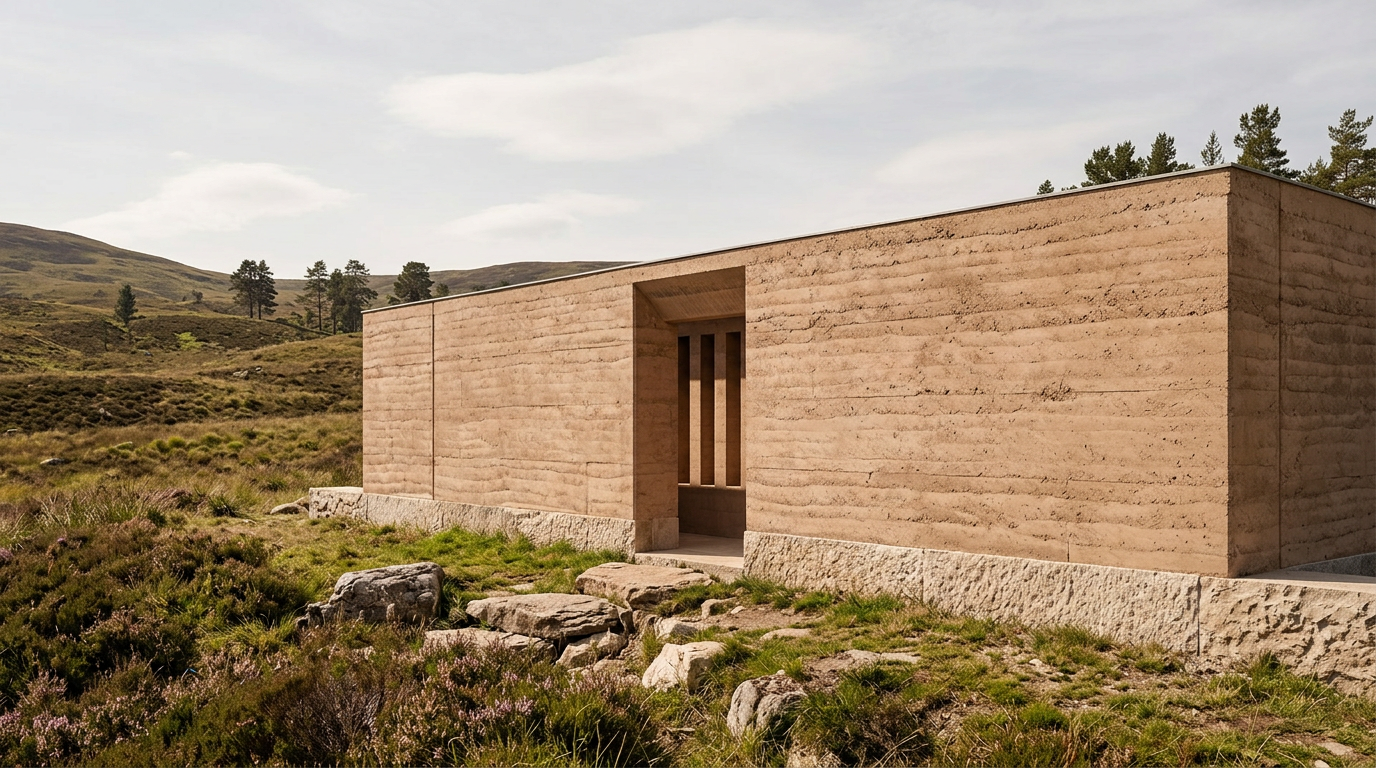
- Imagined Renaissance Rajasthani beach cabins adopt this technique for environmental resilience.
The Climate Cost of Material Choices
The construction industry contributes significantly to global carbon emissions. A substantial portion of these emissions, known as embodied carbon, is generated during material extraction, manufacturing, transportation, and construction processes. Traditional building materials like concrete and steel, while possessing high strength and durability, typically carry a high embodied carbon cost. Concrete production alone accounts for a considerable percentage of global CO2 emissions due to the energy-intensive process of clinker manufacturing.
Conversely, materials sourced locally with minimal processing can drastically reduce embodied carbon. Rammed earth exemplifies this principle. The primary component, soil, is often abundant on or near building sites, minimizing transportation distances. The energy required for its compaction is significantly lower than for firing bricks or producing cement. This reduction in energy consumption at the various stages of the material's life cycle, from quarrying to construction, points to a more sustainable building paradigm.
Rammed Earth (Pisé) in Imagined Renaissance Rajasthan
While historical evidence of extensive coastal construction in Renaissance Rajasthan is limited due to its predominantly inland geography, the principles of rammed earth construction align with the region's historical use of earth-based materials. Rajasthan has a long tradition of utilizing locally available soil and stone for construction, particularly in its fortresses and vernacular dwellings. This historical context provides a basis for imagining how rammed earth, or pisé, could have been adapted for new typologies like beach cabins, if such a coastal context existed.
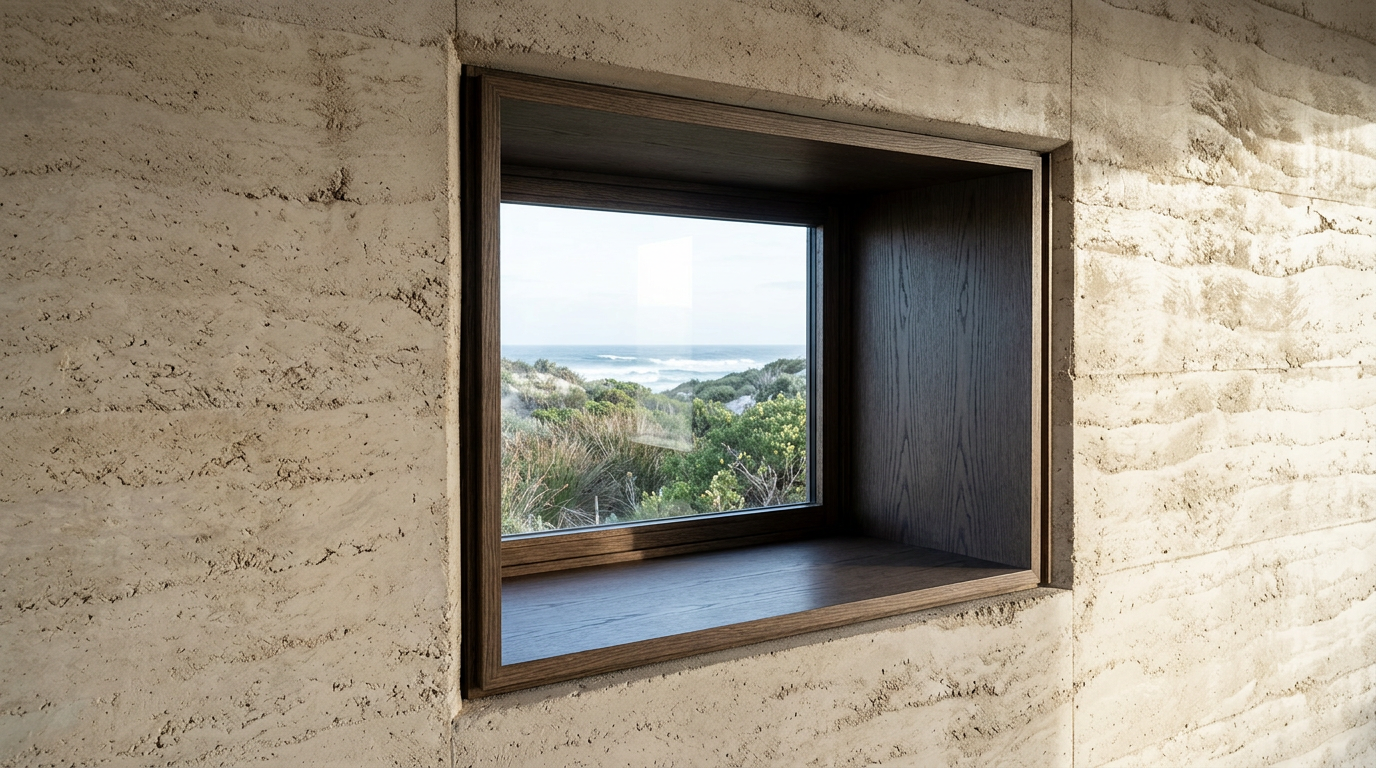
Rammed earth walls are formed by compacting successive layers of damp soil, often stabilized with a small percentage of cement or lime, within a temporary formwork. The resulting monolithic walls possess high thermal mass, which helps regulate interior temperatures by absorbing and releasing heat slowly. This property is crucial in climates with significant diurnal temperature fluctuations, common in many arid and semi-arid regions. In a hypothetical Rajasthani coastal setting, this thermal mass would mitigate the impact of intense daytime sun and cooler nights, maintaining a stable indoor environment without reliance on mechanical systems.
Material Lifecycle and Embodied Carbon
The full material lifecycle of rammed earth is distinct from conventional materials. Its primary components are inert and natural, meaning they can typically be returned to the earth without significant ecological impact at the end of a building's life. This inherent recyclability contrasts sharply with the disposal challenges presented by many modern synthetic materials. The low processing associated with rammed earth also means fewer chemical byproducts and less industrial waste generated during its production.
The embodied carbon calculation for a rammed earth structure is primarily driven by the energy expended in excavation, mixing, and compaction, along with any stabilizers used. If stabilizers like cement are kept to a minimum, or natural alternatives like lime are used, the embodied carbon footprint remains very low. The long lifespan of well-constructed rammed earth buildings further amortizes this initial embodied energy over many decades, enhancing its sustainability credentials. This approach directly tackles the cross-cutting theme of climate cost by prioritising materials with minimal environmental impact from
In Short
Rammed earth offers a low-carbon, sustainable alternative for construction by leveraging local materials and inherent thermal properties.
Key takeaways
- —Rammed earth minimizes embodied carbon through local sourcing and low-energy processing.
- —High thermal mass in rammed earth walls provides passive climate control, reducing energy use.
- —The material lifecycle of rammed earth is sustainable, allowing for natural recycling.
- —Architectural choices in a conceptual Renaissance Rajasthan prioritize environmental impact.
Frequently asked
What is embodied carbon in construction?
+
Embodied carbon refers to the greenhouse gas emissions associated with the manufacturing, transportation, and construction of building materials, as well as their end-of-life disposal. It represents the carbon footprint of a material before a building is even occupied.
How does rammed earth reduce embodied carbon?
+
Rammed earth significantly reduces embodied carbon by utilizing locally sourced soil, minimizing transportation emissions. The manufacturing process is low-energy compared to materials like concrete or steel, further lowering its carbon footprint.
What are the thermal benefits of rammed earth?
+
Rammed earth walls possess high thermal mass, allowing them to absorb and slowly release heat. This natural regulation helps maintain stable indoor temperatures, reducing the need for mechanical heating and cooling systems and lowering operational energy consumption.
Is rammed earth a historically relevant material in Rajasthan?
+
While direct historical evidence of extensive pisé coastal constructions in Renaissance Rajasthan is limited, the region has a long tradition of using earth and stone for vernacular and fortified structures. This suggests an inherent understanding and application of local, natural building materials.
What is the material lifecycle of rammed earth?
+
The material lifecycle of rammed earth is notable for its sustainability. Composed mainly of natural soil, it has a minimal environmental impact from extraction, low energy input for processing and construction, and can be recycled back into the earth at the end of its useful life, minimizing waste.
How does rammed earth contribute to sustainable building practices?
+
Rammed earth contributes to sustainable building by reducing embodied carbon, offering excellent thermal performance, promoting the use of local materials, and ensuring a low-impact material lifecycle. These factors collectively reduce a building's environmental footprint over its entire existence.
Sources
- The construction industry contributes significantly to global carbon emissions.https://www.unep.org/resources/report/2021-global-status-report-buildings-and-construction
- Concrete production alone accounts for a considerable percentage of global CO2 emissions due to the energy-intensive process of clinker manufacturing.https://www.chathamhouse.org/2018/06/making-concrete-change-innovation-low-carbon-cement-and-concrete/06-cement-and-global-carbon-emissions
- Rajasthan has a long tradition of utilizing locally available soil and stone for construction, particularly in its fortresses and vernacular dwellings.https://www.architectural-heritage.org/rajasthan/default.htm
Topics
Referenced in this piece
Continue reading