
Colour & Palette
Lina Bo Bardi: Orchestrating Sound at SESC Pompéia
Bo Bardi’s design for SESC Pompéia uses raw materials and calculated openings to shape an auditory experience within an industrial shell.
Lina Bo Bardi integrated acoustic comfort and soundscape into SESC Pompéia by retaining and adapting existing industrial structures, utilizing raw materials like exposed brick and concrete, and introducing deliberate elements such as hand-punched openings and water features to shape the building's auditory environment.
Lina Bo Bardi’s transformation of a former drum factory into the SESC Pompéia cultural center in São Paulo exemplifies an architectural approach where existing structures are re-animated through deliberate intervention. Her design did not merely renovate; it engaged with the industrial past, creating new public spaces that resonate both visually and audibly. This adaptive reuse project demonstrates how raw materiality and considered openings contribute to the acoustic comfort and unique soundscape of a building.
In Short
- Lina Bo Bardi re-envisioned a former industrial drum factory for public use.
- SESC Pompéia integrates raw concrete, exposed brick, and water features.
- Acoustic considerations were integral to the building’s material and spatial design.
- The concrete towers with connecting walkways are a key circulation and social element.
Picture Notes
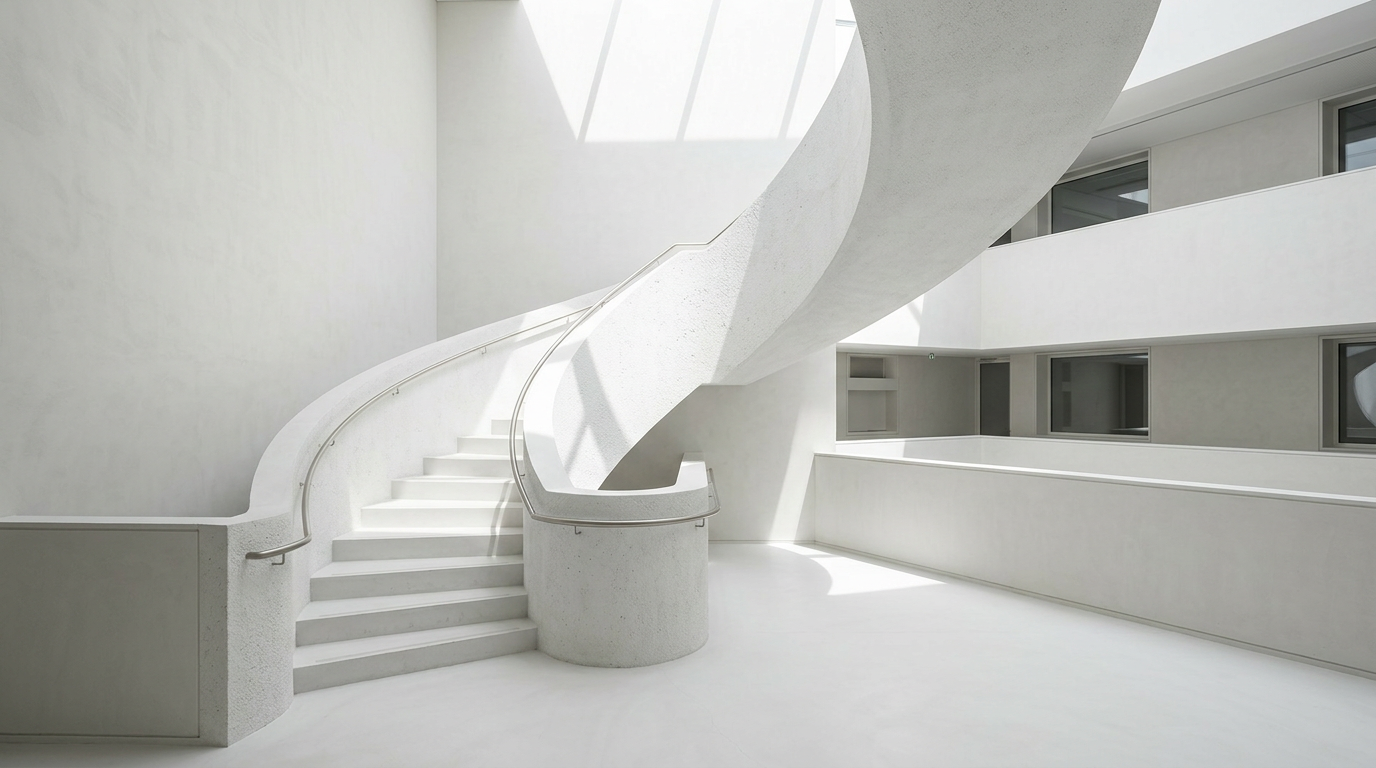
1. Concrete Walkways — Intersecting concrete bridges link the activity towers, creating dynamic vertical circulation routes. The rough texture of the concrete is left exposed. 2. Punched Openings — Irregularly shaped windows pierce the concrete towers, allowing light and sound to filter between spaces. These openings were reportedly hand-punched. 3. Exposed Brick — The original brickwork of the factory buildings forms the primary enclosure. Its natural porosity contributes to the acoustic character. 4. Water Channel — A shallow water channel runs through parts of the ground floor. This feature introduces a constant, soft ambient sound within the main space. 5. Stair Tread Edge — The simple, robust edge of a concrete stair tread highlights the unadorned material palette. Its mass contributes to sound dampening.
Re-animating Industry: The SESC Pompéia Complex
Lina Bo Bardi initiated the SESC Pompéia project in 1977, transforming a disused industrial complex in the Pompéia district of São Paulo. The site comprised a 1930s drum factory, which Bo Bardi chose to retain and integrate into her design rather than demolish. She aimed to preserve the memory of the industrial past while creating a vibrant public center. The existing brick sheds, with their distinctive sawtooth roofs, were maintained and adapted for cultural and recreational activities.
The most striking additions are two concrete towers dedicated to sports and leisure, connected by bold, elevated walkways. These brutalist concrete structures rise sharply from the low-lying factory buildings. The irregular, hand-punched openings in the concrete facades of these towers are a hallmark of Bo Bardi
In Short
Lina Bo Bardi transformed a drum factory into SESC Pompéia, integrating acoustic considerations through material choices and deliberate spatial interventions.
Key takeaways
- —Lina Bo Bardi’s SESC Pompéia is a landmark adaptive reuse project.
- —The project maintains the industrial character of its original drum factory site.
- —Material choices like raw concrete and exposed brick define the aesthetic and acoustic properties.
- —Deliberate openings and water features contribute to a unique soundscape.
- —The concrete towers and walkways are central to the complex’s vertical circulation and social interaction.
Frequently asked
What is SESC Pompéia?
+
SESC Pompéia is a cultural and sports center in São Paulo, Brazil, designed by architect Lina Bo Bardi, converted from a former industrial drum factory.
What are the key architectural features of SESC Pompéia?
+
Key features include the preservation of the original brick factory sheds, the addition of two raw concrete towers, and a system of elevated concrete walkways connecting these new and old structures. Irregular, hand-punched openings in the concrete facades are also characteristic.
How does Lina Bo Bardi use materials in SESC Pompéia?
+
Bo Bardi utilized the existing exposed brick of the factory buildings and introduced new elements of raw, untreated concrete. These materials are chosen for their honesty and their inherent properties, including their contribution to the building's acoustic qualities.
What role does sound play in the design of SESC Pompéia?
+
Sound is an integral part of the design. The choice of materials, the geometry of spaces, the hand-punched openings, and the inclusion of water features all contribute to a specific and intentional auditory experience, shaping the overall soundscape and acoustic comfort.
When was SESC Pompéia completed?
+
The main phase of the SESC Pompéia project, including the new towers, was completed in 1982.
Sources
- Lina Bo Bardi initiated the SESC Pompéia project in 1977, transforming a disused industrial complex in the Pompéia district of São Paulo.https://en.wikipedia.org/wiki/Lina_Bo_Bardi
- The main phase of the SESC Pompéia project, including the new towers, was completed in 1982.https://www.archdaily.com/786481/ad-classics-sesc-pompeia-lina-bo-bardi
- Her design for SESC Pompéia involved keeping the existing 1930s drum factory buildings and adding new structures, including concrete towers of walkways.https://www.domusweb.it/en/architecture/2012/10/26/lina-bo-bardi-sesc-pompeia.html
- The irregularly shaped openings in the concrete facades of the towers were reportedly hand-punched.https://en.wikipedia.org/wiki/SESC_Pomp%C3%A9ia
- A shallow water channel runs through parts of the ground floor of SESC Pompéia.https://www.archdaily.com/786481/ad-classics-sesc-pompeia-lina-bo-bardi
Topics
Continue reading