
Material Notes
Northern Light: Four Houses for the Day-Lover
A guide to architectural masterpieces in Scandinavia and Mallorca, celebrated for their mastery of natural illumination.
Four houses renowned for their mastery of natural light include Alvar Aalto's Villa Mairea, Erik Gunnar Asplund's Woodland Chapel, Arne Jacobsen's own house in Klampenborg, and Jørn Utzon's Can Lis.
Northern Light: Four Houses for the Day-Lover
These four houses in Northern Europe and the Mediterranean exemplify a profound engagement with natural light, offering distinct approaches to its capture and modulation. Each project represents a seminal work by its architect, demonstrating how design can shape the human experience through the careful manipulation of sunshine and shadow.
In Short
- Aalto's Villa Mairea: A Finnish forest retreat integrating nature and light through organic forms.
- Asplund's Woodland Chapel: A serene Swedish sanctuary where light directs contemplation.
- Jacobsen's Klampenborg House: A Danish residence using precise fenestration for domestic comfort.
- Utzon's Can Lis: A Mallorcan stone house defining space with framed views and controlled apertures.
Picture Notes
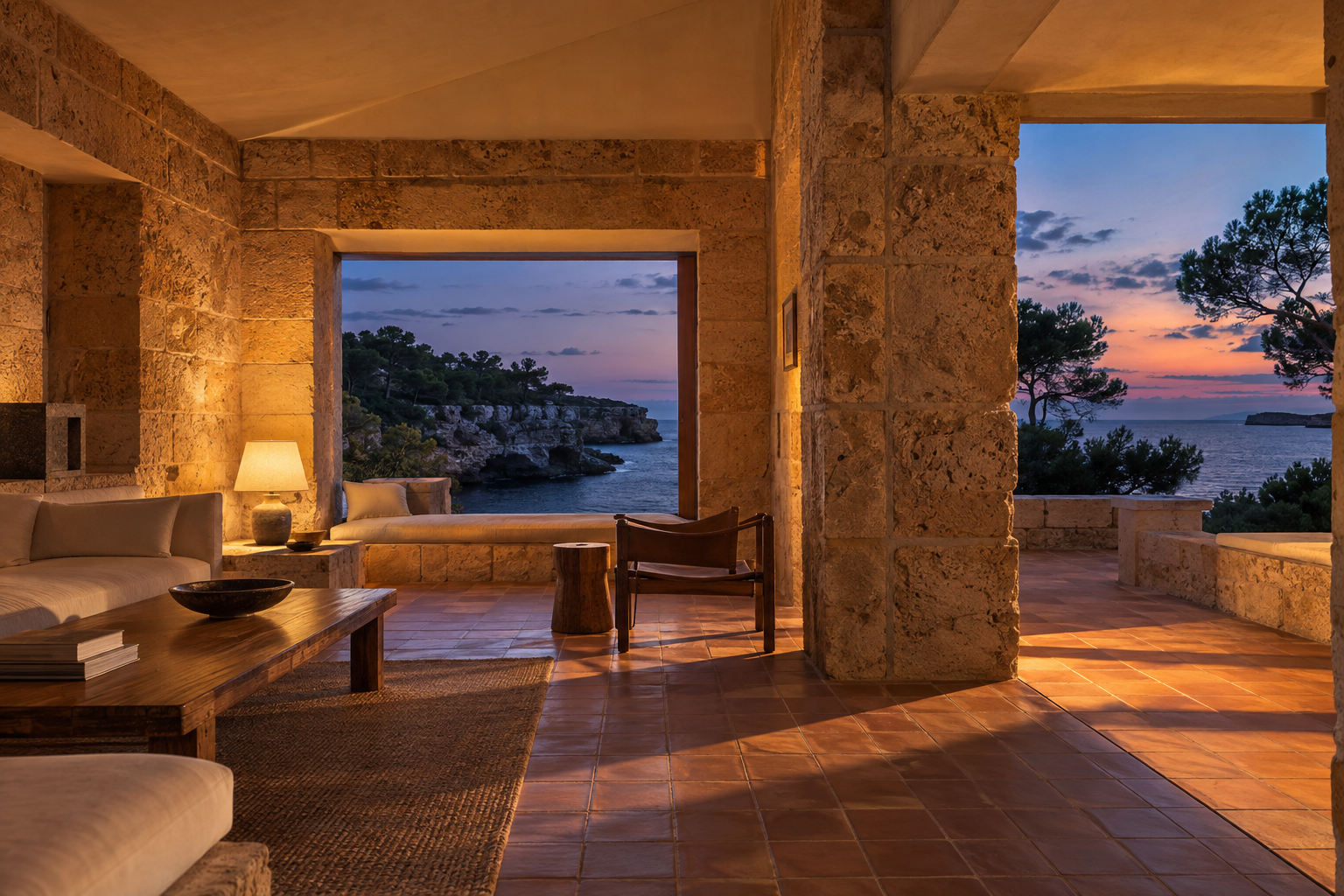
1. Glazed corner junction — The junction of two large panes of glass in the living room of Villa Mairea allows for an almost seamless visual connection to the surrounding pine forest. 2. Skylight above altar — A concealed skylight within the Woodland Chapel illuminates the altar area with a soft, diffused glow, emphasizing its spiritual significance. 3. Dining area window — A horizontal strip window in Jacobsen's own house at Klampenborg frames the garden, bringing in consistent, ambient light to the dining space. 4. Interior stone wall aperture — A deep-set window in Can Lis carves through a thick stone wall, creating a shaded alcove and framing a precise view of the Mediterranean.
Villa Mairea, Noormarkku, Finland
Villa Mairea, completed in 1939 for Harry and Maire Gullichsen, stands as a prime example of Alvar Aalto's experimental approach to Modernism. Located in Noormarkku, Finland, the residence blends regional traditions with international styles, deeply integrating its forest setting. Aalto designed numerous elements of the house, from furniture to door handles, creating a cohesive architectural experience. The building is renowned for its organic forms, material richness—including local timber and stone—and its inventive use of natural light. Large windows and strategically placed glazed walls break down the barrier between interior and exterior, particularly in the double-height living areas. The house is considered a landmark of 20th-century architecture and remains privately owned but accessible for guided tours.
Visiting notes: Reservations for guided tours are essential due to its private ownership and limited group sizes. Plan to book several weeks in advance, particularly during the summer months.
Woodland Chapel, Stockholm, Sweden
Erik Gunnar Asplund's Woodland Chapel (Skogskapellet) in Stockholm, Sweden, constructed in 1920, is a poignant early work within the larger Woodland Cemetery (Skogskyrkogården) complex. This small, timber-framed structure, topped with a striking conical roof, demonstrates Asplund's profound sensitivity to landscape and materiality. The chapel's interior is characterized by a restrained palette and an intimate scale. Light enters subtly, often from unseen sources or through carefully proportioned openings, creating an atmosphere of quiet reflection. The deliberate manipulation of daylight here serves to underscore the chapel's spiritual purpose, guiding the visitor's gaze and shaping their experience. The chapel is part of a UNESCO World Heritage Site.
Visiting notes: The Woodland Chapel is easily accessible by public transport from central Stockholm. It is advisable to visit during daylight hours to experience the full effect of Asplund's light orchestration, though the surrounding cemetery is open year-round.
Arne Jacobsen's Own House, Klampenborg, Denmark
Arne Jacobsen's private residence, built in 1929 in Klampenborg, Denmark, offers insight into his early Modernist principles. This house, one of his first independent architectural projects, showcases a meticulous attention to detail and a pragmatic approach to domestic living. The design features a flat roof, white rendered facades, and steel-framed windows, all hallmarks of the emerging Modern movement. Jacobsen's use of daylight is precise; windows are often carefully proportioned and placed to frame specific views or to provide ambient illumination without glare. The dwelling is distinguished by its measured response to its site and its innovative integration of functional elements. It remains a private residence, offering an important historical perspective on Jacobsen's trajectory.
Visiting notes: As a privately owned residence, the interior is not open to the public. However, its exterior can be appreciated from the street, providing a view of its significant architectural features within the suburban context of Klampenborg.
Can Lis, Portopetro, Mallorca, Spain
Jørn Utzon's Can Lis, completed in 1972 near Portopetro, Mallorca, is a powerful exploration of site-specific design and material authenticity. Built for Utzon and his wife, this house is carved into a cliff face overlooking the Mediterranean. It is constructed predominantly from local Marès sandstone, harvested from a nearby quarry. The house is a sequence of distinct volumes, each oriented to capture specific views and light conditions. Deep apertures and carefully calibrated openings filter the intense Mediterranean sun, creating dramatic contrasts of light and shadow within the raw stone interiors. The house is celebrated for its deep connection to its landscape and its use of elemental forms. Can Lis is now managed by the Utzon Foundation and is available for architectural study and limited stays.
Visiting notes: Access to Can Lis is restricted to protect its integrity. The Utzon Foundation offers opportunities for researchers and architecture professionals to visit. Public access is generally not available, though occasional open days may be announced.
Suggested Route
For those embarking on this architectural journey, a logical progression might begin in Finland at Villa Mairea. From there, travel to Stockholm to experience the quiet grandeur of the Woodland Chapel. Next, head south to Denmark to observe Jacobsen's early Modernist home in Klampenborg. Conclude the itinerary on the island of Mallorca at Can Lis, contrasting the northern and southern European approaches to light and landscape.
ARCHITECTT Note
The careful articulation of light, whether diffused, direct, or reflected, defines the character and experiential quality of these structures. In the ARCHITECTT studio, we consider how framing views and controlling apertures can sculpt interior volumes with light.
Closing
These four houses collectively demonstrate the enduring power of architectural intention in shaping human experience through daylight. From Aalto's organic integration of forest and form to Utzon's sculptural response to the Mediterranean cliff, each project offers distinct lessons in spatial composition and atmospheric creation. They remind us that light is not merely illumination, but a fundamental building material, capable of evoking mood, directing movement, and forging deep connections to place. Their continued relevance lies in their ability to inspire contemplation on the delicate balance between natural forces and designed environments.
FAQ
What makes Villa Mairea unique in its approach to daylight?
Villa Mairea uses extensive glazing, including corner windows, and integrates the surrounding Finnish forest directly into the living spaces, blurring the line between interior and exterior and maximizing natural light.
How does the Woodland Chapel manipulate light for spiritual effect?
The Woodland Chapel employs subtle, often concealed light sources and carefully proportioned openings to create a serene, introspective atmosphere, directing focus and enhancing the sense of sanctity.
Is Arne Jacobsen's house in Klampenborg open to the public?
No, Arne Jacobsen's house in Klampenborg is a private residence and is not open for public interior visits. Its exterior, however, can be observed from the street.
What materials contribute to Can Lis's distinctive light quality?
Can Lis is primarily constructed from local Marès sandstone. The thick stone walls allow for deep-set windows and apertures that filter the strong Mediterranean sun, creating dramatic interplay of light and shadow.
Why are these four houses considered important examples of daylighting?
These houses are celebrated for their innovative and diverse strategies for incorporating natural light, ranging from panoramic forest views to carefully controlled apertures and spiritual illumination, each pushing the boundaries of architectural design.
Can I visit all four houses easily on a single trip?
Visiting all four houses would require travel across Finland, Sweden, Denmark, and Spain, making it a multi-leg journey. It is feasible for dedicated architectural enthusiasts, but requires careful planning for international travel.
In Short
Four iconic houses by Aalto, Asplund, Jacobsen, and Utzon showcase exceptional architectural daylighting techniques across Northern Europe and the Mediterranean.
Key takeaways
- —Alvar Aalto's Villa Mairea integrates organic forms and extensive glazing to connect interiors with the Finnish forest, maximizing natural light.
- —Erik Gunnar Asplund's Woodland Chapel uses subtle light manipulation to create a serene and spiritual atmosphere.
- —Arne Jacobsen's Klampenborg house exemplifies early Modernist principles with precise fenestration for controlled ambient light.
- —Jørn Utzon's Can Lis on Mallorca utilizes local sandstone and deep apertures to sculpt light and shadow, connecting the house to its cliffside site.
- —These architectural examples demonstrate diverse strategies for using natural light as a fundamental design element to shape human experience and connection to place.
Sources
- Villa Mairea, completed in 1939 for Harry and Maire Gullichsen, stands as a prime example of Alvar Aalto's experimental approach to Modernism.https://en.wikipedia.org/wiki/Villa_Mairea
- Erik Gunnar Asplund's Woodland Chapel (Skogskapellet) in Stockholm, Sweden, constructed in 1920, is a poignant early work within the larger Woodland Cemetery (Skogskyrkogården) complex.https://en.wikipedia.org/wiki/Woodland_Chapel
- Arne Jacobsen's private residence, built in 1929 in Klampenborg, Denmark, offers insight into his early Modernist principles.https://en.wikipedia.org/wiki/Arne_Jacobsen
- Jørn Utzon's Can Lis, completed in 1972 near Portopetro, Mallorca, is a powerful exploration of site-specific design and material authenticity.https://en.wikipedia.org/wiki/Can_Lis
Topics
Continue reading