Built Intelligence
David Lea: Critical Regionalism and the Cornish-Moroccan Riad
Exploring David Lea's synthesis of vernacular forms and material lifecycle considerations on the Cornish coast.
David Lea's architecture on the Cornish coast applied critical regionalism by reinterpreting Moroccan riad principles and integrating materials like copper roofing, with a focus on embodied carbon and material lifecycle sustainability.
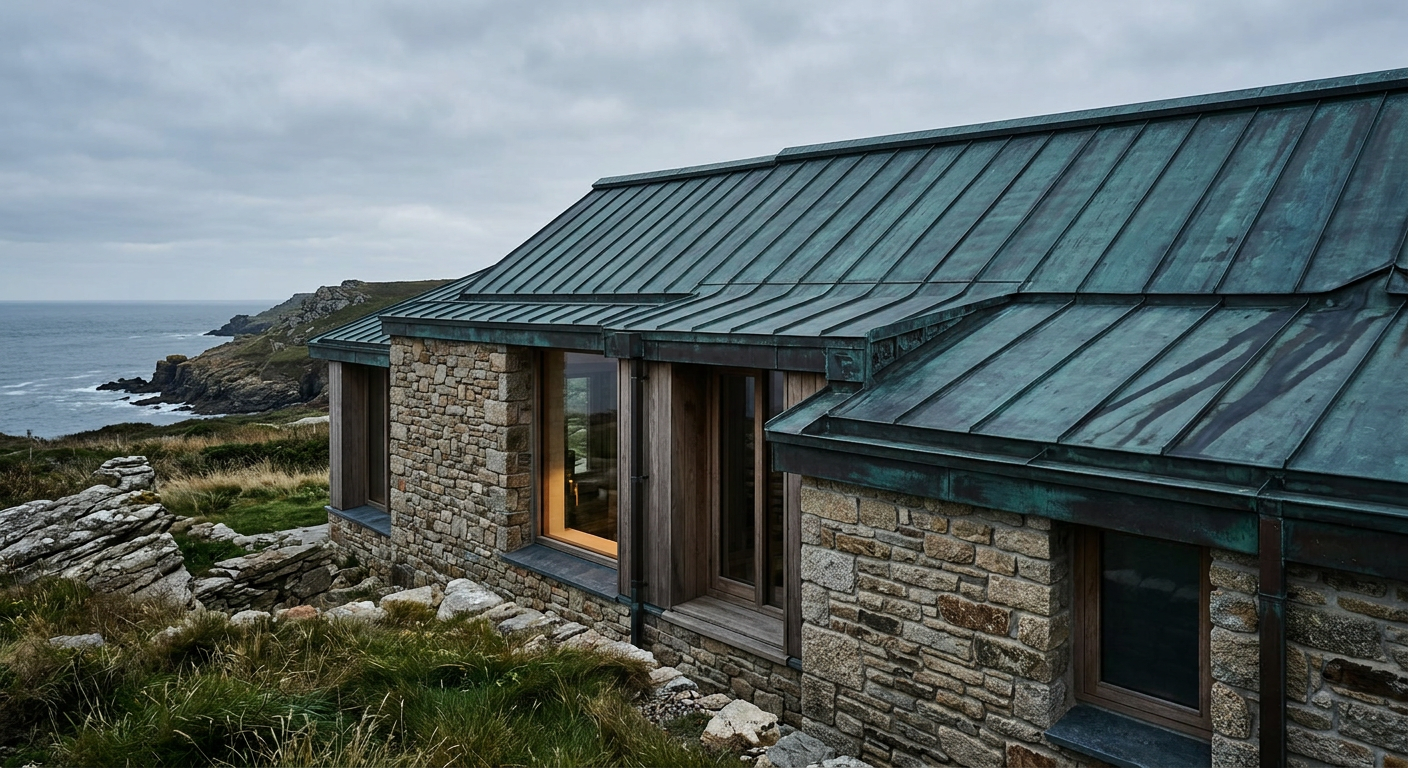
David Lea's architecture demonstrated how critical regionalism could inform sustainable practice, particularly in his interpretation of the Moroccan riad typology situated on the Cornish coast. He integrated traditional building techniques and local materials with an understanding of embodied carbon and material lifecycles. This approach resulted in structures that resonated with their immediate environment while minimizing ecological impact, exemplified by his selective use of copper roofing and its natural patina process.
In Short
- David Lea applied critical regionalism to projects on the Cornish coast.
- He reinterpreted Moroccan riad principles for a temperate climate.
- Material lifecycle and embodied carbon were central to his design philosophy.
- The use of copper roofing exemplified a durable, low-impact material choice.
A Regional Response to Typology
David Lea's work often sought to synthesize established typologies with the specific environmental and cultural conditions of a site. His engagement with the Moroccan riad, typically a structure designed for arid climates with inward-facing courtyards, represented a significant adaptation. In the context of the Cornish coast, characterized by its temperate, often wet, and windswept conditions, Lea re-envisioned the riad's core principles. The traditional riad's enclosed courtyard, serving as a microclimate moderator in hot regions, was adapted to provide sheltered outdoor space, mitigating the coastal elements while maximizing natural light and views not traditionally sought in its Moroccan counterpart. This was not a direct transposition, but a reinterpretation, drawing on the riad's inherent spatial qualities—privacy, central gathering, and controlled access to the exterior—and adapting them to a new climatic and cultural context.
Embodied Carbon and Material Lifecycle
Lea's architectural practice prefigured contemporary concerns regarding embodied carbon and the material lifecycle in construction. He advocated for the use of materials with low environmental impact, sourced locally where possible, and possessing inherent durability. This went beyond mere aesthetics; it was a fundamental aspect of his design ethic. For Lea, the selection of materials was not solely about form or function but also about the energy expended in their extraction, processing, transportation, and eventual disposal or reuse. His emphasis on natural, untreated, and long-lasting materials served to reduce the climate cost of his buildings. This focus on longevity decreased the frequency of replacement and refurbishment, thereby reducing future carbon emissions associated with construction and waste.
The Craft of Copper and Patina
Copper roofing was a material often integrated into Lea's Cornish projects, chosen for its aesthetic qualities and its specific material lifecycle advantages. Copper is a durable metal, known for its longevity and resistance to corrosion, particularly in coastal environments where salt-laden air can quickly degrade other materials. The material's natural patination process, where a protective green-blue oxidization layer forms over time, is a key aspect of its appeal and performance. This patina not only contributes to the building's aesthetic integration with the natural landscape but also acts as a self-healing barrier, extending the roof's lifespan significantly. The embodied carbon of copper, while higher than some traditional materials like timber, is mitigated by its extreme durability and high recyclability. Copper has one of the highest recycling rates among engineering metals, with a significant portion of newly produced copper deriving from recycled sources, extending its lifecycle indefinitely. This characteristic aligns with Lea's philosophy of minimizing long-term environmental burdens.
ARCHITECTT Note
We recognize David Lea's work as a prescient examination of how architectural practice can marry regional sensitivity with a profound understanding of environmental stewardship. His approach to the Moroccan riad on the Cornish coast is not merely an exercise in style; it is a demonstration of how a building's presence can be diminished in ecological terms through thoughtful design and material selection, setting a precedent that remains relevant in contemporary discourse on sustainable architecture.
Closing
David Lea's explorations with the Moroccan riad on the Cornish coast illustrate a cohesive approach to architecture that transcends stylistic categorizations. His work provides a model for how buildings can be designed with a deep respect for their geographic and climatic context, while also addressing pressing environmental concerns. The integration of vernacular forms with a considered material palate, such as copper for its durability and sustainable lifecycle, stands as a testament to an architectural vision that prioritizes both enduring design and ecological responsibility.
FAQ
What is Critical Regionalism?
Critical regionalism is an architectural approach that seeks to counter the placelessness and lack of identity of modern architecture by using local forms, materials, and traditions, while still engaging with universalizing modern architectural elements. It aims to provide a culturally specific and climatically responsive solution.
How did David Lea adapt the riad typology for Cornwall?
David Lea adapted the inward-looking, courtyard-focused Moroccan riad to the Cornish coast by reinterpreting the courtyard as a sheltered outdoor space, protected from coastal winds and rain. He maintained the riad's principles of privacy and controlled access but oriented the design to embrace natural light and views specific to the Cornish landscape.
Why was copper roofing a suitable material choice for Lea's designs?
Copper roofing was chosen for its durability, resistance to corrosion in coastal environments, and its natural patination process which forms a protective, self-healing layer. This longevity contributes to a reduced material lifecycle impact and aligns with sustainable building practices due to copper's high recyclability.
What is embodied carbon in construction?
Embodied carbon refers to the greenhouse gas emissions associated with the extraction, manufacturing, transportation, installation, maintenance, and disposal of building materials. It represents the carbon footprint of a building's entire lifecycle, excluding operational emissions from heating or cooling.
How did Lea address material lifecycle in his architecture?
Lea addressed material lifecycle by selecting durable, long-lasting, and often locally sourced materials. He prioritized materials that required minimal processing and had the potential for recycling or natural degradation, thereby reducing the environmental impact over the building's entire lifespan.
In Short
David Lea's Cornish coastal architecture adapted Moroccan riad principles using critical regionalism and sustainable material choices such as copper roofing.
Key takeaways
- —David Lea integrated critical regionalism with sustainable building practices.
- —His reinterpretation of the Moroccan riad typology suits the Cornish coast.
- —Material lifecycle and embodied carbon were central to Lea's material selection.
- —Copper roofing exemplifies his preference for durable, low-impact, recyclable materials.
Frequently asked
What is Critical Regionalism?+
Critical regionalism is an architectural approach that seeks to counter the placelessness and lack of identity of modern architecture by using local forms, materials, and traditions, while still engaging with universalizing modern architectural elements. It aims to provide a culturally specific and climatically responsive solution.
How did David Lea adapt the riad typology for Cornwall?+
David Lea adapted the inward-looking, courtyard-focused Moroccan riad to the Cornish coast by reinterpreting the courtyard as a sheltered outdoor space, protected from coastal winds and rain. He maintained the riad's principles of privacy and controlled access but oriented the design to embrace natural light and views specific to the Cornish landscape.
Why was copper roofing a suitable material choice for Lea's designs?+
Copper roofing was chosen for its durability, resistance to corrosion in coastal environments, and its natural patination process which forms a protective, self-healing layer. This longevity contributes to a reduced material lifecycle impact and aligns with sustainable building practices due to copper's high recyclability.
What is embodied carbon in construction?+
Embodied carbon refers to the greenhouse gas emissions associated with the extraction, manufacturing, transportation, installation, maintenance, and disposal of building materials. It represents the carbon footprint of a building's entire lifecycle, excluding operational emissions from heating or cooling.
How did Lea address material lifecycle in his architecture?+
Lea addressed material lifecycle by selecting durable, long-lasting, and often locally sourced materials. He prioritized materials that required minimal processing and had the potential for recycling or natural degradation, thereby reducing the environmental impact over the building's entire lifespan.
Sources
- David Lea's architectural practice prefigured contemporary concerns regarding embodied carbon and the material lifecycle in construction.https://www.architectsjournal.co.uk/archive/david-lea
- Copper has one of the highest recycling rates among engineering metals, with a significant portion of newly produced copper deriving from recycled sources, extending its lifecycle indefinitely.https://copperalliance.org/about-copper/sustainability/copper-recycling/
- The material's natural patination process, where a protective green-blue oxidization layer forms over time, is a key aspect of its appeal and performance.https://www.copper.org/applications/architecture/arch_dhb/patina.html
Continue reading