
Built Intelligence
Thermodynamic Logic: The Intelligence of the Passive Envelope
The shift from mechanical reliance to geometric performance in the modern facade.
Built intelligence in thermodynamics utilizes digital simulation to create passive building envelopes that optimize energy flows through geometry rather than high-maintenance mechanical systems.
Modern architecture is moving beyond the 'smart building' trope of sensors and automated blinds. Instead, a deeper form of built intelligence is emerging: the thermodynamic envelope. This approach uses computational fluid dynamics (CFD) and solar path modeling to dictate the very form of a building, ensuring that the structure itself performs the work traditionally relegated to energy-hungry mechanical systems. By embedding environmental logic into the geometry of the facade, architects are creating buildings that breathe, shade, and insulate with surgical precision.
The Shift from Active to Passive Intelligence
For decades, the standard response to environmental discomfort was 'active'—more air conditioning, more mechanical ventilation, more automated hardware. These systems are prone to failure and require significant maintenance. Thermodynamic intelligence shifts this burden to 'passive' elements. Through high-fidelity simulations, architects can now predict how air will move around a corner or how heat will migrate through a floor plate.
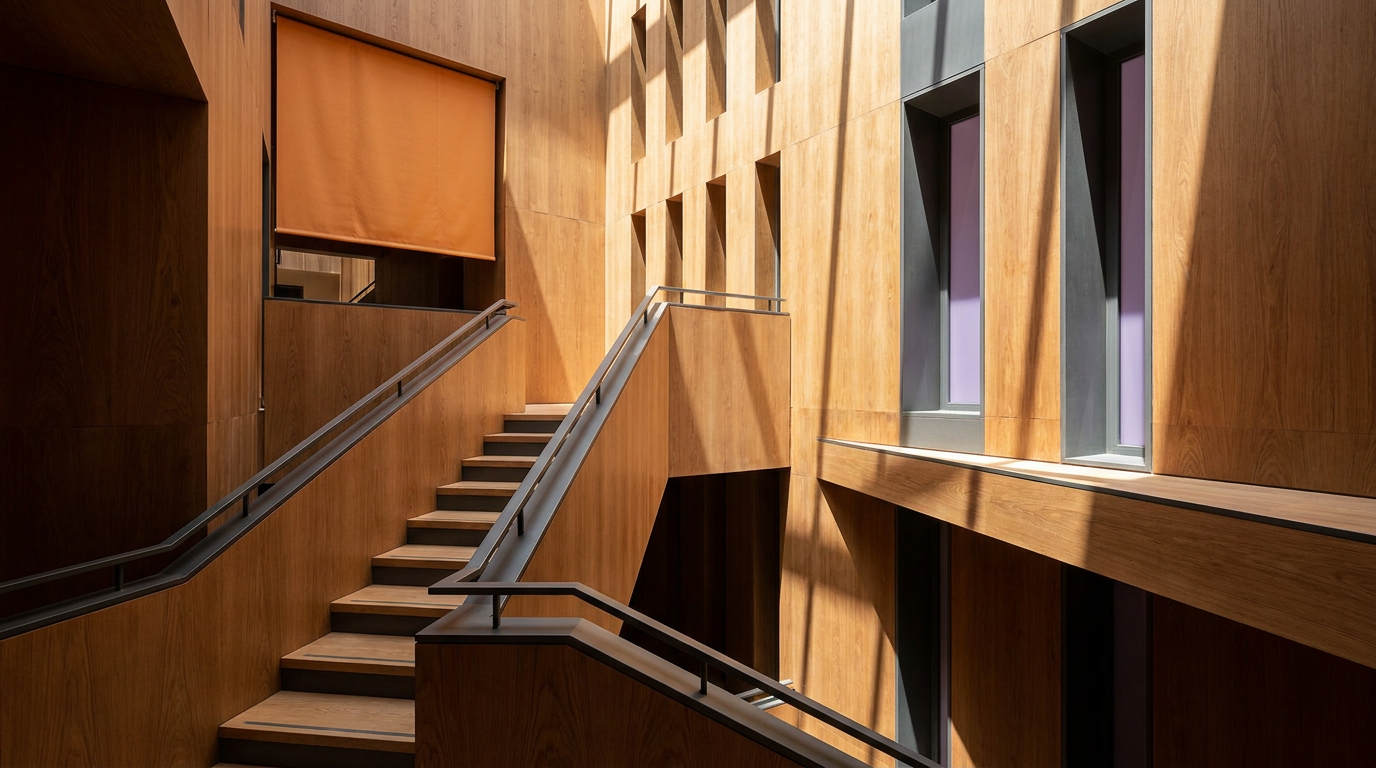
Mapping these energy flows allows for the creation of 'performative geometry.' For instance, a building’s orientation and the depth of its window reveals are no longer just aesthetic choices; they are calculated responses to specific solar angles. By optimizing these curves and depths, a structure can maximize winter heat gain while completely shading itself during the summer solstice, all without a single moving part.
Modeling the Invisible: Air and Heat
The primary tool for this intelligence is Computational Fluid Dynamics (CFD). Historically used in aerospace and automotive engineering, CFD allows architects to visualize the invisible movement of air. When applied to an atrium or a facade, it reveals how pressure differentials can be harnessed to drive natural ventilation.
In projects that utilize these tools, the building becomes a chimney. Cold air is drawn in at lower levels, and as it warms, it rises and exhausts through the roof. The intelligence lies in the calibration of the openings and the thermal mass of the interior surfaces, which act as batteries for heat. This level of control reduces the 'tonnage' required for HVAC units, often allowing for smaller mechanical rooms and higher ceiling heights.
The Materiality of Thermal Logic
Thermodynamic intelligence also dictates material distribution. Instead of a uniform wall assembly, an intelligent envelope might vary its insulation thickness or thermal mass based on its orientation. A north-facing wall (in the northern hemisphere) requires high R-values to prevent heat loss, while an eastern facade might prioritize thermal lag—the ability of a material to absorb heat during the morning and release it slowly in the evening.
Stone, concrete, and mass timber are being rediscovered through this digital lens. Modeling software can determine the exact thickness of a stone wall needed to delay the peak outdoor temperature by twelve hours, ensuring the interior remains cool during the day and warm at night. This is not a new concept—ancient desert architecture relied on thermal mass—but the precision offered by modern simulation elevates it to a sophisticated technical discipline.
Case Studies in Energetic Form
Several contemporary projects exemplify this logic. The works of firms like Transsolar or architecture studios like Lacaton & Vassal demonstrate that 'intelligence' often means doing more with less. In their renovations, the addition of winter gardens creates a thermal buffer zone—a literal 'extra skin' that adjusts the building's temperature through simple glass louvers and shading cloths.
Similarly, the Kendeda Building at Georgia Tech utilizes a massive 'regenerative porch'—a roof structure that generates energy while providing a microclimate beneath it. The geometry of the porch is tuned to the local climate of Atlanta, providing deep shade and managing rainwater, turning the building's largest surface area into its most hardworking thermodynamic asset.
In Short
- Geometric Performance: Using building shape and depth to manage solar gain and airflow naturally.
- Predictive Modeling: Utilizing CFD and thermal simulations to eliminate the need for oversized mechanical systems.
- Passive Resilience: Moving away from electronic sensors toward permanent, structural solutions for climate control.
- Thermal Lag Mastery: Calibrating material density to regulate internal temperatures throughout the diurnal cycle.
ARCHITECTT Note
The industry must move away from the obsession with 'smart' gadgets that eventually become electronic waste. True built intelligence is found in the physical layers of the building. When a facade is designed with professional-grade thermodynamic rigor, it remains intelligent for the life of the structure, independent of software updates or power grids. This is the most honest form of sustainability we have.
FAQ
How does thermodynamic modeling affect an architect's workflow?
It requires environmental consultants to be present from the concept phase. Instead of designing a shape and 'fixing' it later with HVAC, the shape is iterated based on performance data.
Is this approach more expensive than traditional construction?
While it may involve higher initial design costs due to complex simulations, it significantly reduces long-term operational costs and often lowers the capital expenditure on mechanical equipment.
Does this limit the aesthetic freedom of the designer?
On the contrary, it provides a new set of parameters that can lead to unique, site-specific forms that a purely aesthetic approach might never discover. Geometry becomes a functional narrative.
In Short
Thermodynamic intelligence replaces mechanical complexity with geometric precision to create high-performance building envelopes.
Key takeaways
- —Digital simulations allow for the prediction of thermal behavior before construction begins.
- —Passive intelligence reduces long-term operational costs and carbon footprints.
- —Geometry is used as a primary tool for managing solar gain and natural airflow.
- —The move from 'smart' gadgets to 'intelligent' structures improves building longevity.
Sources
- Computational fluid dynamics (CFD) and thermal modeling are transforming the traditional building envelope.Kieran, S., & Timberlake, J. (2004). Refabricating Architecture. McGraw-Hill Professional.
- The Kendeda Building at Georgia Tech utilizes a massive 'regenerative porch'.Georgia Institute of Technology - The Kendeda Building for Innovative Sustainable Design.
Topics
Continue reading