
Transformation Logic
Kyushu in Sydney: The Subterranean Soundscape of a Wine Archive
A Sydney project utilizes Edo-period Japanese joinery and modern CLT to craft a subterranean wine archive with precise acoustic properties.
A Sydney subterranean wine archive utilizes modern cross-laminated timber (CLT) combined with principles of Edo-period Japanese joinery, set within a material palette of charred cedar and blackened steel, to achieve precise acoustic comfort and thermal stability suitable for wine preservation.
The transformation of subterranean spaces into specialized archives requires careful consideration of both environmental stability and sensory experience. In Sydney, a unique wine archive has been realized, drawing on the refined joinery techniques of Edo-period Japan and the structural versatility of cross-laminated timber (CLT). This synthesis creates an environment where thermal regulation and acoustic comfort coexist, defining the building's auditory character as much as its function.
In Short
- A subterranean wine archive in Sydney integrates Edo-period Japanese joinery with modern CLT.
- The design prioritizes precise acoustic comfort and soundscape within the archive.
- Charred cedar and blackened steel define the material palette, enhancing thermal stability.
- CLT, processed with traditional Japanese methods, manages humidity and vibration.
Historical Precedent in Subterranean Architecture
The creation of controlled subterranean spaces has historical precedents across diverse cultures. In Japan, particularly during the Edo period (1603-1868), traditional storage methods often utilized earth's thermal mass. Kura, or storehouses, frequently featured thick earthen walls and elevated floors to protect contents from humidity and temperature fluctuations. While not strictly subterranean, these structures demonstrate an understanding of environmental control through passive means. The principle of leveraging geological stability for preservation informs contemporary subterranean projects. These modern interpretations reinterpret historical insight through advanced material science and construction techniques. The Sydney wine archive embodies this continuity, translating ancient wisdom into a modern context, ensuring both stability and a specific sensory identity.
Cross-Laminated Timber Joinery and Acoustic Design
Cross-laminated timber (CLT) is central to the structural and acoustic performance of the Sydney wine archive. While CLT is a contemporary engineered wood product, its application in this project draws upon the precision of Edo-period Japanese joinery. Traditional Japanese carpentry masterfully utilized interlocking wood components without metal fasteners, showcasing an understanding of timber's anisotropic properties and long-term structural integrity. This project employs a similar meticulous approach to the fabrication and assembly of CLT panels, creating a robust, monolithic structure.
CLT's inherent mass and layered composition contribute significantly to its acoustic damping capabilities. The archive's design incorporates CLT panels not only for structural support but also as a primary element in shaping the internal soundscape. The timber surfaces absorb and diffuse sound, mitigating reverberation and creating a calm, quiet atmosphere conducive to the careful handling and storage of wine. Specific detailing in the CLT joinery, inspired by techniques suchedosashikake or okuriari, ensures tightly fitting, vibration-resistant connections. These joints contribute to the overall acoustic isolation of the archive, preventing external noise intrusion and internal sound buildup.
Material Palette and Auditory Character
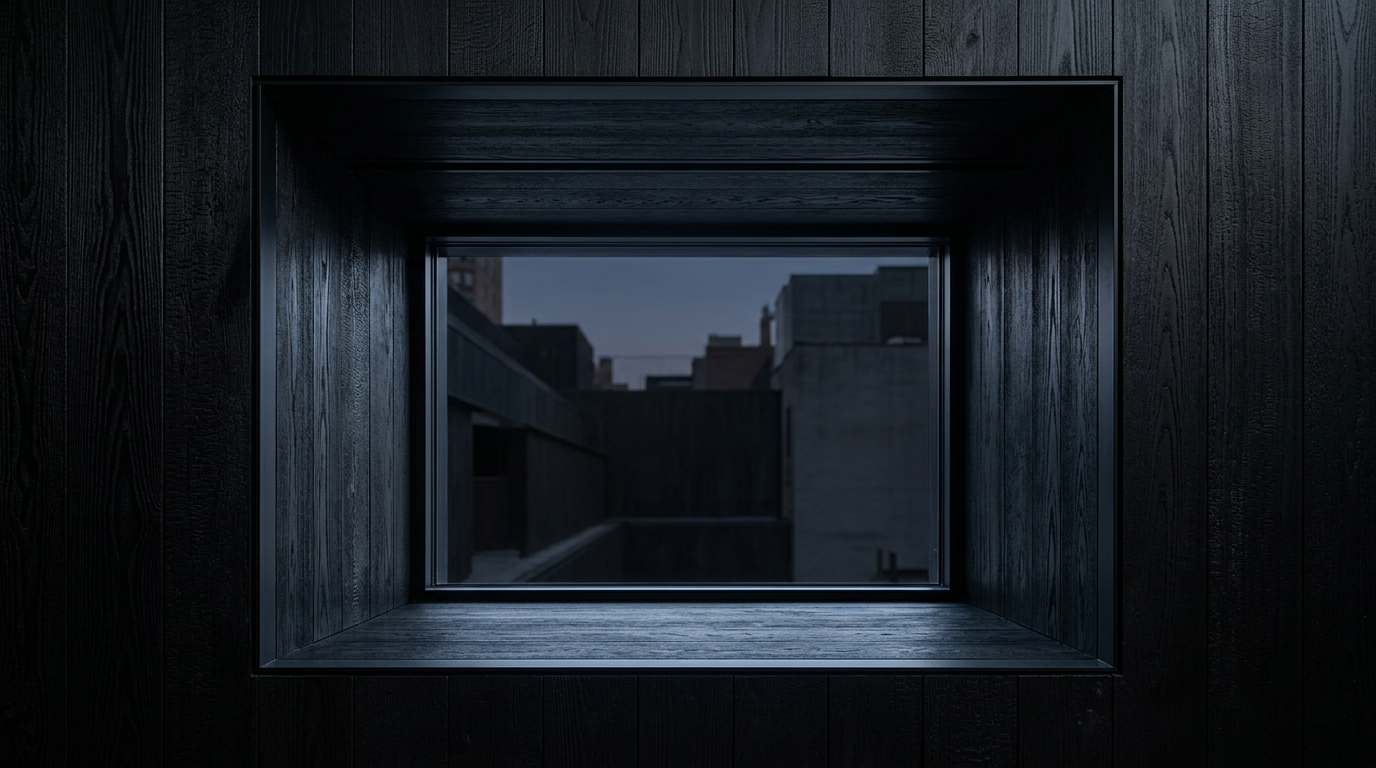
The material palette of the Sydney wine archive is defined by its deep, achromatic tones: basalt, anodised black aluminium, smoked glass, and shou-sugi-ban charred cedar. These materials contribute to the aesthetic of a precise, modern volume while also possessing specific acoustic properties. Shou-sugi-ban, a traditional Japanese method of charring cedar to preserve it, creates a deeply textured, carbonized surface. This charring not only provides durability but also enhances sound absorption, reducing echo within the cavernous space. The irregular surface of the charred wood diffuses sound waves, preventing harsh reflections.
Blackened steel detailing, used for racks and structural connections, complements the timber and stone. Steel, when precisely fabricated and isolated, contributes to the overall stability without introducing unwanted resonances. Smoked glass, used in observation panels or display cases, offers both visual depth and a degree of sound insulation. Basalt, with its dense, uniform structure, contributes to thermal stability and, through its mass, acts as a barrier to sound transmission. The combination of these materials creates an auditory character that is subdued, controlled, and acoustically isolated, underscoring the archive's function as a sanctuary for its contents.
Thermal Regulation and Subterranean Stability
The subterranean location of the wine archive provides an inherent advantage in thermal regulation. Earth's thermal mass buffers against external temperature fluctuations, maintaining a stable internal climate. This natural stability is critical for wine preservation, which requires consistent temperature and humidity levels. The thick CLT panels further enhance this by providing an additional layer of insulation and moisture buffering.
While the subterranean context offers passive thermal benefits, precise control systems manage humidity and ensure optimal conditions. The choice of materials, including the shou-sugi-ban cedar and basalt, plays a role in this microclimate management. These materials typically have low thermal conductivity and are resistant to moisture, contributing to the archive's long-term environmental stability. The integration of traditional joinery ensures that the structural elements themselves contribute to the sealed, stable environment, minimizing air infiltration and maintaining a consistent internal atmosphere. This meticulous control is essential for the delicate aging process of fine wines.
ARCHITECTT Note
The Sydney wine archive represents a compelling synthesis of historical craft and contemporary engineering. It underscores that architectural intelligence extends beyond form and into the deeper consideration of sensory experience. The integration of ancient Japanese joinery principles with modern materials like CLT suggests a future where sustainability is not merely about material choice but about a holistic understanding of how buildings endure and perform across multiple dimensions.
Closing
The subterranean wine archive in Sydney stands as a testament to considered design, where the principles of Edo-period Japanese joinery and the acoustic properties of CLT converge. The result is a structure that is both technically sophisticated and sensorially rich. This project demonstrates that the transformation of existing spaces, especially those below ground, can yield environments of profound stillness and precision, attuned to their specialized functions.
FAQ
What is Cross-Laminated Timber (CLT)?
Cross-Laminated Timber (CLT) is an engineered wood product made by gluing together multiple layers of solid wood panels, with each layer oriented perpendicular to the next. This cross-lamination enhances structural stability, strength, and rigidity.
How does Edo-period Japanese joinery influence this project?
Edo-period Japanese joinery traditions emphasize precise, interlocking wood connections without the use of metal fasteners. In this project, these principles inform the careful fabrication and assembly of CLT panels, enhancing structural integrity and acoustic performance.
What are the main materials used in the wine archive?
The primary materials include basalt, anodised black aluminium, smoked glass, shou-sugi-ban charred cedar, and blackened steel detailing. This palette creates a dark, restrained aesthetic.
How does the subterranean location control temperature and humidity?
The earth's thermal mass naturally buffers against external temperature fluctuations, providing a stable, cool environment. This passive regulation is supplemented by precise environmental control systems to manage humidity.
What role does shou-sugi-ban play in the archive's acoustics?
Shou-sugi-ban, or charred cedar, contributes to sound absorption due to its textured, carbonized surface. This helps to reduce reverberation and create a quieter interior soundscape.
In Short
A Sydney subterranean wine archive combines Edo-period Japanese joinery with Cross-Laminated Timber for precise acoustic and thermal control.
Key takeaways
- —The Sydney wine archive blends traditional Japanese joinery with modern CLT for structural and acoustic performance.
- —A dark material palette of charred cedar and blackened steel contributes to both aesthetics and sound dampening.
- —Subterranean location provides natural thermal stability, crucial for wine preservation.
- —Precise detailing in CLT joinery minimizes vibration and external noise intrusion.
Sources
- The Edo period (1603-1868)https://www.britannica.com/event/Edo-period
- Kura, or storehouses, frequently featured thick earthen walls and elevated floorshttps://en.wikipedia.org/wiki/Kura_(storehouse)
- Shou-sugi-ban, a traditional Japanese method of charring cedar to preserve ithttps://en.wikipedia.org/wiki/Yakisugi
- Cross-laminated timber (CLT) is an engineered wood product made by gluing together multiple layers of solid wood panels, with each layer oriented perpendicular to the next.https://www.thinkwood.com/education/how-its-made-clt
Topics
Referenced in this piece
Continue reading