
Stories of Place
Courtyard Logic: The Microclimate of the Void
The courtyard as a thermal engine and social sanctuary in the Mediterranean urban fabric.
Mediterranean courtyards function as passive climate regulators, using thermal mass, shade, and water to create cool, private microclimates within dense urban environments.
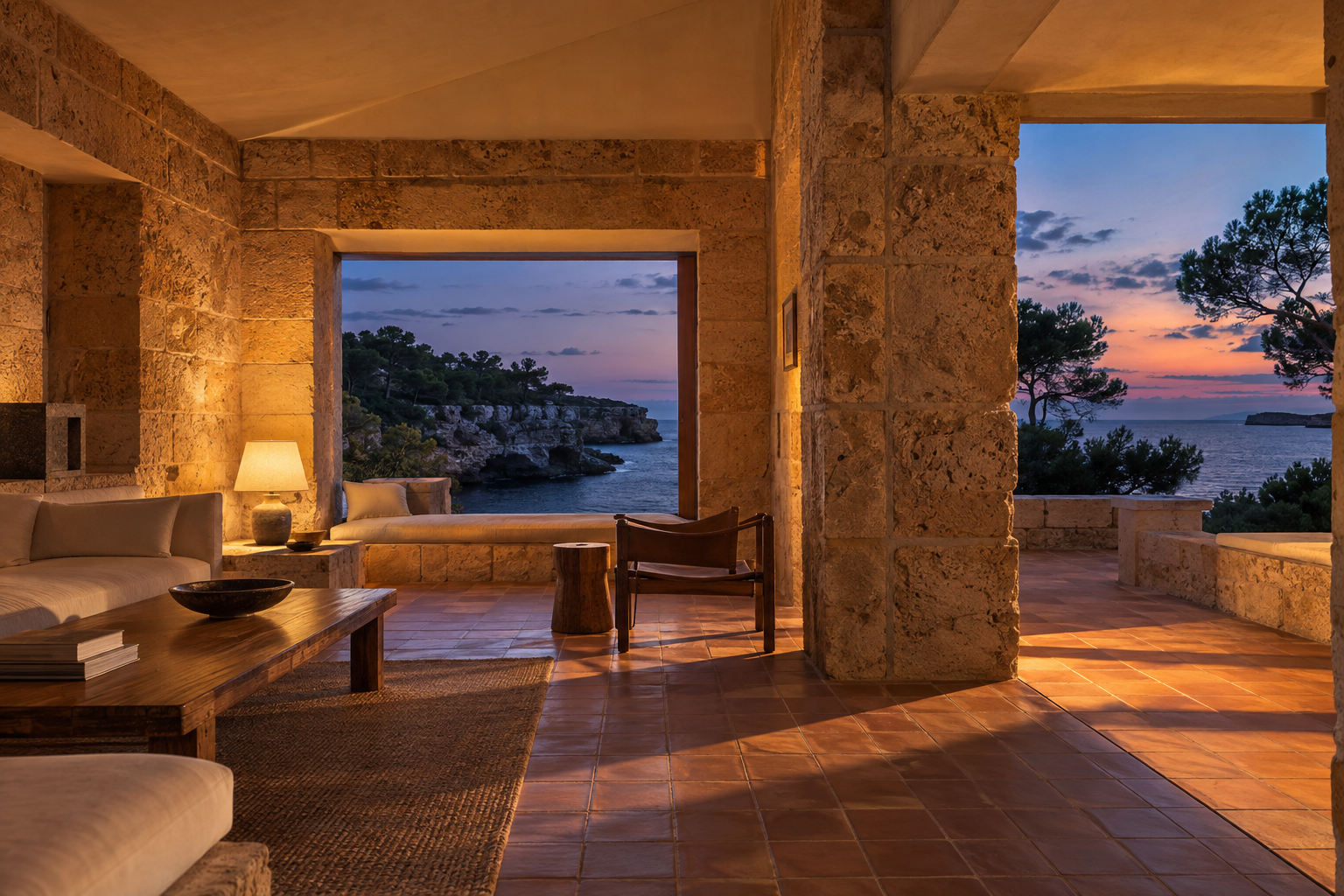
The Mediterranean courtyard is not merely an aesthetic preference; it is a thermal engine designed to negotiate the tension between a relentless sun and the human need for respite. This typology, refined over millennia from Roman atriums to Andalusian patios, treats the void as a structural and climatic nucleus. By internalizing the exterior, the architecture creates a microclimate that can remain ten degrees cooler than the surrounding streetscape without the aid of mechanical systems.
The Physics of the Void
The efficiency of the courtyard rests on three physical principles: thermal mass, shading, and the stack effect. In the traditional Mediterranean context, thick masonry walls serve as a heat sink. During the daylight hours, these walls absorb solar radiation, preventing it from penetrating the interior living quarters. As the sun sets and the ambient temperature drops, the stored heat is slowly released into the cool night air, stabilizing the internal temperature.
The geometry of the courtyard itself dictates its performance. A narrow, deep courtyard ensures that the floor remains in shadow for the majority of the day. This pocket of cool air, denser than the air above it, remains settled at the base of the space. When the interior rooms are opened to the courtyard, this cool air is drawn inside. Conversely, as the air within the courtyard warms, it rises and escapes, creating a natural convection current—the stack effect—that pulls fresh air through the building's perimeter.
Moisture and Evaporative Cooling
Beyond simple geometry, the Mediterranean courtyard utilizes moisture as a tactical cooling agent. The presence of a central fountain or a density of broad-leafed vegetation is a deliberate engineering choice. Through the process of evaporative cooling, energy is extracted from the air to transform water from liquid to vapor, resulting in a perceptible drop in temperature.
This is most evident in the patio traditions of Southern Spain, where the scent of jasmine and the sound of trickling water are secondary to the primary function of humidification. In these spaces, the courtyard acts as an evaporative lung, breathing cooled, moistened air into the shaded galleries that surround it. This moisture also helps to settle dust, improving the air quality within the dense urban fabric of Mediterranean cities.
The Social Logic of Interiority
Architecture is rarely purely functional; the courtyard also serves as a profound psychological threshold. In a region where urban life is often loud and public, the courtyard offers a radical inversion. It provides a "controlled outdoor" space where the sky is the only visible neighbor. This spatial shorthand for privacy allows for large apertures and transparent boundaries that would be impossible on a street-facing facade.
The transition from the narrow, sun-bleached street into the shaded, quiet courtyard provides a sensory reset. This sequence—the darkened zaguan or entry passage followed by the sudden expansion into the light-filled court—emphasizes the domestic sanctuary. It is an architecture of the threshold, where the logic of the city ends and the logic of the family begins.
In Short
- Climatic Buffer: Courtyards use thermal mass and shading to create stable, cool microclimates.
- Passive Cooling: The stack effect and evaporative cooling provide natural ventilation and temperature reduction.
- Acoustic Sanctuary: The internalized layout filters urban noise, creating a quiet domestic core.
- Visual Privacy: The sky-facing orientation allows for openness without sacrificing security or modesty.
ARCHITECTT Note
In the current discourse on sustainable urbanism, we often look to new technologies to solve the problem of heat. However, the Mediterranean courtyard demonstrates that geometry and material density are frequently more effective than mechanical intervention. As we design for a warming planet, the "introverted" logic of the courtyard offers a template for high-density, low-energy housing that prioritizes human comfort through the clever manipulation of shadow and air.
FAQ
Why are Mediterranean courtyards often paved in stone or tile instead of grass?
Stone and ceramic tiles have a high thermal capacity. They remain cool to the touch when shaded and allow for easy cleaning and water management. Unlike grass, they do not require significant irrigation in arid climates and contribute to the thermal "coolth" of the floor.
How does courtyard architecture handle the winter months?
While designed for heat, the courtyard also manages winter logic. The sun sits lower in the sky, allowing solar radiation to reach deeper into the courtyard and strike the thermal mass of the walls, which then radiate warmth into the house during the cooler nights.
Is the courtyard typology still relevant in modern high-density cities?
Yes. Modern architects utilize the courtyard to solve the "light and air" problem in deep floor plates. By carving voids into large blocks, designers can ensure every unit has access to natural cross-ventilation and private outdoor space, even in the heart of a metropolis.宣宣宣宣宣宣宣本
In Short
The Mediterranean courtyard is a sophisticated thermal engine that uses spatial configuration to master regional climate and privacy.
Key takeaways
- —Courtyards act as thermal buffers, stabilizing indoor temperatures through high-density mass.
- —The internalization of the garden provides a private acoustic and visual sanctuary in dense cities.
- —Evaporative cooling from central fountains or vegetation lowers ambient temperature via phase change.
- —The typology facilitates natural stack-effect ventilation, purging hot air from the dwelling.
Topics
Continue reading