
Sustainability & Climate
Vaulted Oriel: Critical Regionalism in Highland Vineyards
Architectural decisions in the Scottish Highlands integrate vaulted brickwork with a restrained timber palette, establishing a dialogue between material and site.
Critical Regionalism in Scottish Highland vineyard architecture integrates site-specific responses and material integrity, often employing traditional craft like Catalan vaulting with contemporary timber construction. This approach prioritizes a building's functional and perceptual qualities, where the material palette directly informs its inherent color.
Critical Regionalism in the Scottish Highlands finds expression in vineyard architecture that prioritizes site-specific responses and material integrity. These structures, often drawing on traditional craft while embracing contemporary methods, demonstrate how architectural decisions extend beyond mere aesthetics, impacting a building's functional and perceptual qualities. The integration of vaulted brickwork, particularly the Catalan vault, with a precisely articulated timber palette, serves as a primary example, where structural and aesthetic considerations are interwoven from conception.
In Short
- Scottish Highland vineyard architecture employs Critical Regionalism to integrate with its environment.
- Vaulted brickwork, such as the Catalan vault, merges structural efficiency with aesthetic character.
- The material palette, focusing on engineered oak and charred cedar, dictates the building's inherent color.
- Architectural choices in these designs respond directly to climate and local material availability.
Regional Adaptations and Material Expression
The architectural approach within the Scottish Highlands for structures such as vineyard mas often involves a nuanced understanding of local climate and available resources. Critical Regionalism, as a framework, guides these designs, emphasizing a mediating approach between global architectural trends and the particularities of a specific locale. This is evident in practices that combine traditional building techniques, like certain forms of masonry, with modern timber construction methods.
For example, the application of a Catalan vault in a Scottish context represents an adaptation rather than a direct replication. This vaulting technique, known for its thin shell and structural efficiency, enables generous spans while minimizing material. Historically, it relies on a rapid-setting mortar and layers of thin brick or tile. In the Highlands, such an application considers the insulating properties and moisture resistance essential for viticulture buildings. The material palette for these structures often features engineered oak CLT, forming the primary structural elements, complemented by elements of charred cedar for external cladding. This charring process enhances durability and imparts a rich, dark hue, which becomes a key decision in the building's color palette, rather than an applied finish.
The Colour Palette as an Architectural Decision
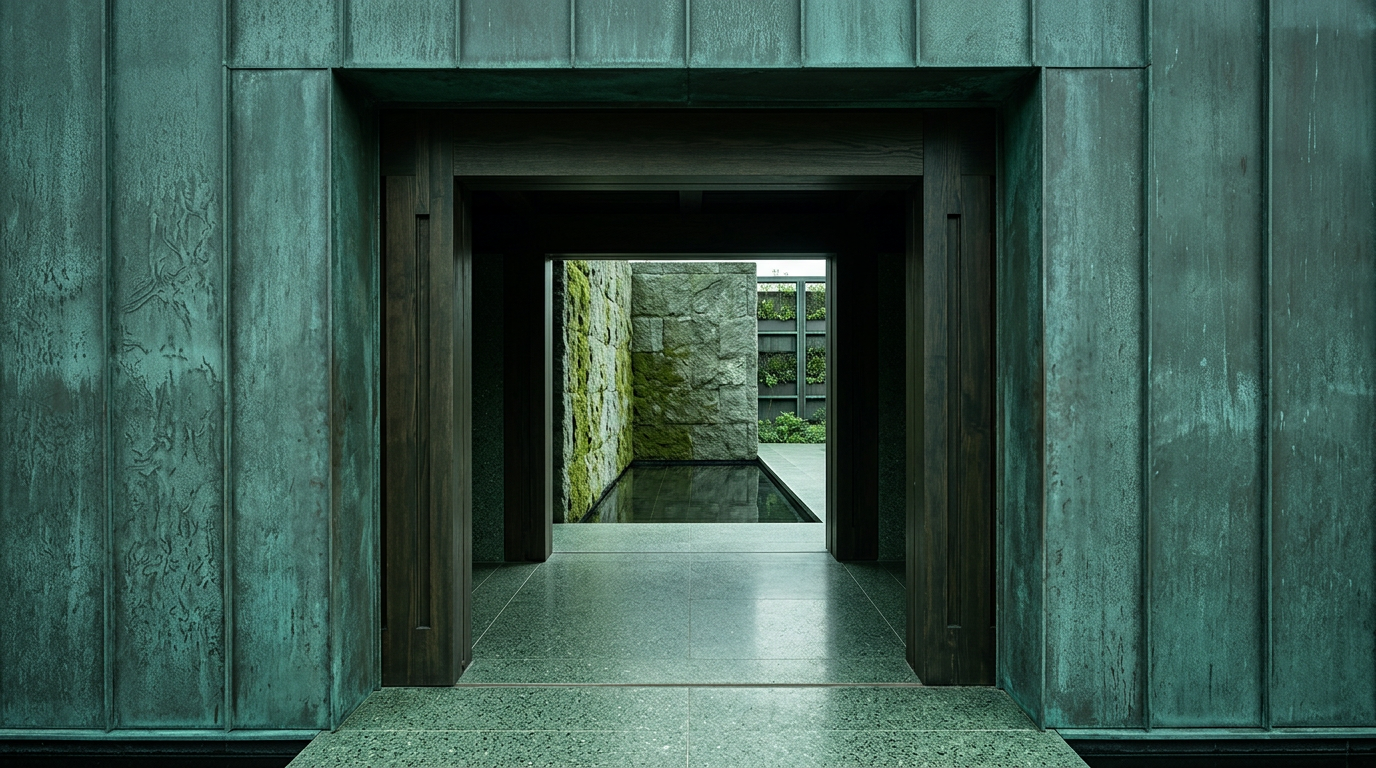
In these Highland vineyard mas, the selection of materials directly informs the building's inherent color palette. This is not a decorative choice but an architectural decision, intrinsically linked to the material's properties and its interaction with the environment. Smoked-oak veneer, douglas-fir glulam, and charred cedar are chosen for their structural capabilities, thermal performance, and their distinct visual qualities. Smoked-oak veneer contributes warm, deep tones, while charred cedar presents a near-black surface that contrasts with the natural timber interiors.
The visual effect of these materials is a muted and earthy range, drawing directly from the landscape. The precisely expressed timber joinery, often left visible, highlights the craftsmanship and allows the natural grain of engineered oak to add texture and subtle color variation. This approach avoids superficial ornamentation, allowing the architecture to speak through its materiality and its carefully considered assembly. The resulting palette is robust and enduring, resistant to the harsh Highland weather, and deeply integrated with the building's form and function.
Structural Innovation and Traditional Craft
The integration of vaulted brickwork with contemporary timber framing showcases a synthesis of structural innovation and traditional craft. While the Catalan vault has historical roots in regions like Catalonia, its application here demonstrates a transferable structural logic. The vault's inherent strength is derived from its geometry, allowing for expansive, column-free spaces vital for a vineyard's operational needs, such as wine production or storage. These vaults often integrate with larger glulam beams or engineered oak frameworks, creating a composite structure that balances strength with material lightness.
Precision timber joinery, a hallmark of high-quality contemporary timber construction, ensures structural integrity and contributes to the aesthetic. Connections are often expressed, rather than concealed, celebrating the assembly process. This transparency in construction reinforces the building's honest material expression. The combined use of vaulted brickwork and engineered timber allows for a high degree of prefabrication in some elements, increasing construction efficiency while maintaining detailed craftwork in others.
ARCHITECTT Note
We observe how architecture in challenging climates often yields innovative solutions that balance historical precedent with contemporary technology. The emphasis on material-derived color palettes underscores a growing commitment in design to integrate functional and aesthetic considerations seamlessly, moving beyond decorative applications to an architecture of inherent material truth. This approach resonates with broader discussions on sustainable building practices and regional identity.
Closing
The architectural endeavors in the Scottish Highlands, particularly within the context of vineyard developments, reflect a sophisticated understanding of place and material. By embracing principles of Critical Regionalism and integrating techniques like vaulted brickwork within a contemporary timber framework, these projects define a meaningful architectural response. The deliberate choice of materials, which inherently determines the color palette, demonstrates an approach where every element contributes to the building's structural integrity, environmental performance, and visual identity. This methodology ensures buildings are not merely placed upon the landscape, but emerge from it, expressing both resilience and refinement.
FAQ
What is Critical Regionalism in architecture?
Critical Regionalism is an approach to architecture that resists the placelessness and lack of identity of International Style modernism by drawing on local geography, climate, light, and tectonic traditions. It seeks to mediate between universal architectural trends and regional particularities.
How does the Catalan vault contribute to sustainable design?
Catalan vaults are praised for their structural efficiency, using thin layers of brick or tile and minimal formwork, thereby reducing material consumption compared to traditional concrete slab construction. Their thermal mass can also contribute to stable interior temperatures, reducing energy needs.
What role does charred cedar play in the Highlands vineyard architecture?
Charred cedar is used for its enhanced durability, resistance to rot and insects, and natural fire retardancy, all beneficial in the damp and sometimes harsh climate of the Scottish Highlands. Aesthetically, the charring process creates a dark, rich surface that contributes a natural, non-applied color to the building's exterior.
Why is the color palette considered an architectural decision, not decoration, in these projects?
The color palette in these cases is determined by the inherent hues and textures of the chosen materials—engineered oak, smoked veneers, charred cedar. These materials are selected for their structural, thermal, and durability properties. Their natural coloration becomes an integral part of the architectural expression, rather than an applied decorative layer, reflecting a deeper integration of form and material.
How do these vineyard mas adapt to the Scottish Highlands climate?
The designs incorporate robust, weather-resistant materials like charred cedar for exterior cladding and engineered timber for structural integrity. The use of vaulted forms can assist with thermal regulation, while precise detailing helps protect against moisture ingress, addressing the region's typically wet and often windy conditions.
In Short
Critical Regionalism in the Scottish Highlands guides vineyard architecture, blending traditional vaulting with modern timber to create structures where the material palette dictates the inherent color and integrates with the environment.
Key takeaways
- —Critical Regionalism in the Scottish Highlands emphasizes site-specific architecture for vineyard mas.
- —The Catalan vault is adapted for structural efficiency and material reduction in the Highland context.
- —Charred cedar provides durability and a distinct, natural dark color, forming a key part of the architectural palette.
- —The color palette is derived directly from the materials, highlighting an architectural decision over decorative aesthetics.
- —Engineered timber and traditional craft are combined to create resilient, climate-adapted structures.
Sources
- Critical Regionalism, as a framework, guides these designs, emphasizing a mediating approach between global architectural trends and the particularities of a specific locale.https://en.wikipedia.org/wiki/Critical_regionalism
- The application of a Catalan vault in a Scottish context represents an adaptation rather than a direct replication. This vaulting technique, known for its thin shell and structural efficiency, enables generous spans while minimizing material.https://en.wikipedia.org/wiki/Catalan_vault
- This charring process enhances durability and imparts a rich, dark hue, which becomes a key decision in the building's color palette, rather than an applied finish.https://www.woodscanada.com/charred-wood-cladding
- The vault's inherent strength is derived from its geometry, allowing for expansive, column-free spaces vital for a vineyard's operational needs, such as wine production or storage.https://www.architectmagazine.com/technology/catalan-vaults
Topics
Referenced in this piece
Continue reading