
Field Notes
Carbon-Fibre Pavilion: Tactility in London's Low-Carbon Concrete
A contemporary London exhibition pavilion explores haptic experiences through innovative low-carbon concrete and carbon-fibre composites, reinterpreting Romanesque tactile traditions.
The NLA Pavilion in London integrates carbon-fibre composites and low-carbon concrete to create a highly tactile exhibition space, emphasizing the haptic experience of its surfaces.
The New London Architecture (NLA) Pavilion, designed by Newtecnic, redefines the exhibition space typology through its innovative use of carbon-fibre composites and low-carbon concrete. This structure, located in London, responds to contemporary demands for sustainable construction while emphasizing the haptic experience of its surfaces. The pavilion's design demonstrates how advanced materials can evoke a sensory engagement akin to historical building traditions, particularly those found in Romanesque architecture.
In Short
- The NLA Pavilion in London integrates carbon-fibre and low-carbon concrete.
- It prioritizes the haptic engagement of occupants with its bush-hammered and micro-cement surfaces.
- The design draws an analogy to Romanesque building's emphasis on material tactility.
- Newtecnic's approach highlights sustainability and material innovation within a public exhibition context.
Rethinking Material Engagement
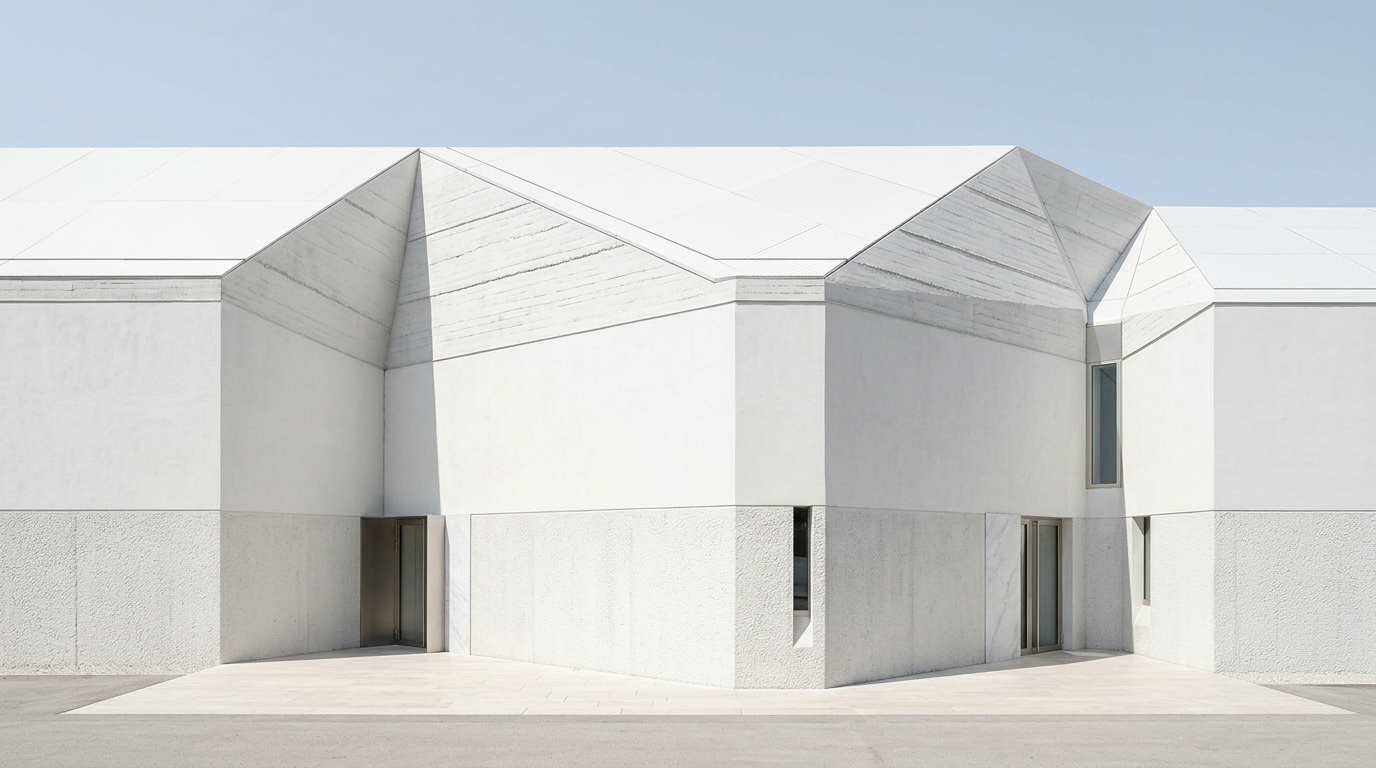
The NLA Pavilion exemplifies a contemporary understanding of material engagement. Its design moves beyond purely visual aesthetics to prioritize the haptic experience. The choice of bush-hammered white concrete creates a textured surface that catches light and shadow, inviting touch. This surface treatment is not merely decorative; it provides an immediate, tactile connection between the visitor and the structure. Micro-cement applications further refine certain areas, offering a smoother, yet still perceptible, finish. This deliberate variation in surface texture encourages a slower, more considered interaction with the building's fabric.
The pavilion's material palette—bush-hammered white concrete, micro-cement, honed Carrara—is carefully curated to contribute to this sensory richness. Brushed nickel detailing complements these textures, providing a cool, precise counterpoint to the warmer, more organic feel of the concrete. The interplay of rough and smooth, cool and warm materials, creates a nuanced haptic landscape. This approach acknowledges that the perception of architecture is multisensory, extending beyond sight to include the sense of touch, weight, and even temperature.
Low-Carbon Concrete and Slag Binder
Central to the pavilion's material innovation is the employment of low-carbon concrete, utilizing ground granulated blast-furnace slag (GGBS) as a binder. GGBS, a by-product of the steel industry, replaces a significant portion of ordinary Portland cement, thereby reducing the embodied carbon of the concrete. This substitution leads to a lower environmental impact, aligning with urgent sustainability goals in construction. The use of GGBS also enhances the concrete's long-term durability and resistance to chemical attack, contributing to the pavilion's longevity.
The tactile quality of this low-carbon concrete is distinct. When bush-hammered, the aggregate is exposed, creating a granular surface that resonates with the raw, artisanal quality often seen in Romanesque stone carving. This finish celebrates the material's inherent properties rather than concealing them. The integration of carbon fibre within the concrete matrix allows for thinner, lighter structural elements, which further minimizes material consumption and associated carbon emissions. This combination of traditional finishing techniques with advanced material science demonstrates a holistic approach to sustainable building.
Romanesque Tactility and Modern Form
Romanesque architecture, particularly prominent in London during the Norman period, often featured robust masonry and richly carved surfaces. Examples include elements within the Tower of London or parts of Westminster Abbey. The emphasis was on the physicality of stone, its texture, and the palpable effort of its crafting. Arches, columns, and portals were frequently adorned with intricate carvings—zigzag patterns, billet molding, and grotesque figures—all designed to be apprehended not just visually, but also through touch. These features provided points of haptic engagement, drawing the viewer into a direct, physical experience of the building.
The NLA Pavilion, while entirely contemporary in form and material, echoes this Romanesque sensibility regarding tactility. Its bush-hammered concrete surfaces, though produced by modern machinery, evoke a similar artisanal quality to hand-chiseled stone. The precise detailing and varied textures within the pavilion prompt a similar engagement, inviting visitors to observe and feel the nuances of its construction. This connection between an ancient architectural principle and a cutting-edge material application underscores the enduring human need for sensory connection to our built environment. The pavilion, through its haptic design, creates a contemporary dialogue with historical forms of material engagement.
ARCHITECTT Note
Architecture's capacity to engage the senses beyond sight often recedes in contemporary practice, favoring smooth, abstract surfaces. The NLA Pavilion reminds us that material texture and haptic feedback offer a profound layer of architectural experience. It suggests that a building's success can be measured not just by its form or function, but by how it feels underhand and underfoot, activating a primal connection to materials and craft.
Closing
The NLA Pavilion in London stands as a case study in how advanced material science and thoughtful design can converge to create highly tactile architectural experiences. By combining low-carbon concrete with sophisticated finishing techniques and carbon-fibre reinforcement, Newtecnic has produced a structure that is both environmentally responsible and deeply engaging on a sensory level. The pavilion's haptic surfaces, from bush-hammered concrete to honed Carrara, invite interaction, creating a memorable encounter for its visitors. This approach enriches the user's understanding of the space through direct physical engagement, establishing a link between ancient craft sensibilities and future building practices.
FAQ
What is low-carbon concrete?
Low-carbon concrete reduces its embodied carbon emissions by replacing a portion of ordinary Portland cement with supplementary cementitious materials, such as ground granulated blast-furnace slag (GGBS) or fly ash.
Why is tactility important in architecture?
Tactility refers to the haptic experience of surfaces. In architecture, it enhances sensory engagement, providing a richer, more immersive interaction with the built environment beyond visual perception alone.
What is ground granulated blast-furnace slag (GGBS)?
GGBS is a finely ground granular material produced from steel slag, used as a partial cement replacement in concrete mixes. It improves concrete's durability and reduces its environmental impact.
How does Romanesque architecture relate to tactility?
Romanesque architecture often features robust masonry and intricately carved stone surfaces that were designed to be both seen and touched, emphasizing the physical and artisanal qualities of the material.
Where is the NLA Pavilion located?
The NLA Pavilion is located in London, serving as an exhibition space for architectural discourse and public engagement.
Who designed the NLA Pavilion?
The NLA Pavilion was designed by Newtecnic, an engineering and design firm known for its work with complex geometries and advanced materials.
In Short
The NLA Pavilion in London merges carbon-fibre and low-carbon concrete to create a haptically rich exhibition space, echoing Romanesque tactile traditions.
Key takeaways
- —The NLA Pavilion combines carbon-fibre and low-carbon concrete for sustainable, haptic design.
- —The pavilion's surfaces emphasize touch, drawing parallels to Romanesque architectural traditions.
- —Low-carbon concrete with GGBS significantly reduces the environmental impact of the structure.
- —Newtecnic's design innovates by integrating advanced materials with a focus on sensory engagement.
- —The project redefines exhibition spaces through its material tactility and sustainable construction.
Sources
- The New London Architecture (NLA) Pavilion, designed by Newtecnichttps://newtecnic.com/projects/nla-pavilion-london
- Its design moves beyond purely visual aesthetics to prioritize the haptic experience. The choice of bush-hammered white concrete creates a textured surface that catches light and shadow, inviting touch.https://newtecnic.com/projects/nla-pavilion-london
- utilizing ground granulated blast-furnace slag (GGBS) as a binderhttps://www.nla.london/news/leading-the-way-to-zero-carbon-with-the-new-nla-pavilion
- Romanesque architecture, particularly prominent in London during the Norman period, often featured robust masonry and richly carved surfaces. Examples include elements within the Tower of London or parts of Westminster Abbey.https://en.wikipedia.org/wiki/Romanesque_architecture_in_England
- The London-based NLA is the capitalâs independent centre for urbanism.https://www.nla.london/about-us
Topics
Referenced in this piece
Continue reading