
Details That Matter
Rainwater and Joinery: Japanese Machiya Hydrology in Renaissance Marrakech
The traditional Japanese machiya offers a precedent for managing rainwater and greywater. Its core principles, particularly when recontextualized within Renaissance-era Marrakech, highlight adaptive architectural responses to diverse climates without sacrificing craftsmanship.
The Japanese machiya integrated sophisticated systems for rainwater harvesting and greywater recycling as fundamental to its design. These systems, combined with intricate kigumi joinery, ensured efficient water management and structural resilience.
The traditional Japanese machiya, a form of wooden townhouse prevalent in Kyoto, developed sophisticated systems for managing rainwater and greywater. These systems, intrinsically linked to the building's structure and material choices, illustrate a long-standing architectural engagement with site hydrology. By examining the machiya through the lens of Renaissance-era Marrakech, we uncover parallel and divergent approaches to water management and craftsmanship, demonstrating how design foresight addresses environmental challenges across distinct cultural and climatic contexts.
In Short
- Japanese machiya integrated rainwater harvesting and greywater recycling as fundamental design elements.
- Intricate kigumi joinery connected structural members, allowing for precise drainage and water flow control.
- The cross-cultural comparison with Renaissance Marrakech highlights distinct yet effective responses to water scarcity.
- This approach to hydrology is not merely functional but extends to aesthetic and material considerations, such as oxidised copper and moss-veiled stone.
The Machiya as a Hydrological System
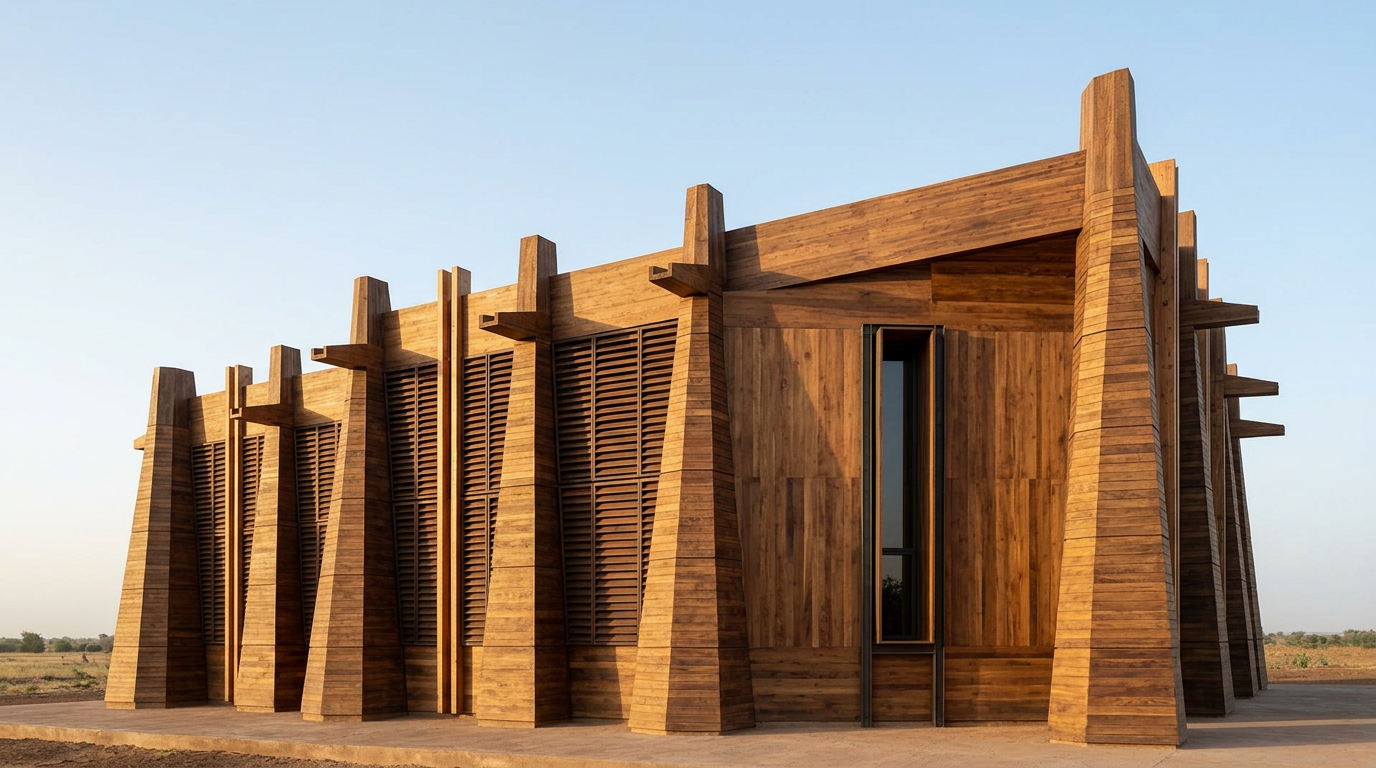
Machiya architecture is characterized by its deep, narrow plots and timber construction. The design of their roofs and courtyards was critical for water collection. Pitched roofs, often clad in ceramic tiles, directed rainfall into systems that could channel water for various uses. Eaves extended significantly to protect timber facades from rain, a purely practical measure that also became a defining aesthetic feature. Rainwater was historically collected in barrels or cisterns for domestic use or garden irrigation, a practice essential in areas where municipal water supplies were limited or non-existent.
Greywater systems, although less formalized than modern approaches, also played a role. Water from washing and cooking was often redirected to gardens, contributing to a self-sufficient domestic ecosystem. This integration of water management was not an afterthought but a primary concern, influencing the layout of the house, the choice of materials, and the detailing of its components. The building itself acted as a permeable membrane, mediating between the urban environment and the dwelling's internal microclimate, where gardens and courtyards often served as focal points for water use and aesthetic engagement. The machiya's careful consideration of water is emblematic of a broader Japanese respect for natural resources.
Kigumi Joinery and Material Precision
Japanese joinery, known as kigumi (), is central to the machiya's structural integrity and its hydrological performance. This intricate system of interlocking timber members requires no nails or screws, relying instead on precise cuts and friction. In the context of water management, kigumi allowed for the creation of robust, stable structures that could handle the stresses of water flow and seismic activity. The precision inherent in these joints ensured tight seals, preventing water ingress in unintended areas while guiding it deliberately to collection points. Carpenters like the lineage of master builders from Kyoto were adept at these techniques, passing down knowledge through generations.
For example, the careful fitting of eaves and guttering, often integrated seamlessly into the timber framework, relied on these advanced joinery techniques. The natural expansion and contraction of wood required a system that could accommodate movement without compromising water tightness or structural stability. This attention to detail extended to the selection of timber, with specific types chosen for their resistance to moisture and decay. The kigumi system thus represents a sophisticated understanding of material behavior and environmental forces, manifesting in an architecture that is simultaneously resilient and elegant.
Rainwater and Greywater as Design Drivers in Marrakech
While the machiya hails from Japan, the cross-cutting theme of rainwater, greywater, and site hydrology as design drivers finds compelling parallels in Renaissance-era Marrakech. The climate of Marrakech, characterized by hot, dry summers and moderate, wetter winters, necessitated ingenious water management strategies. Traditional Marrakechi riads, for instance, are inward-focused courtyard houses, conceptually distinct from the narrow machiya but sharing a fundamental engagement with water scarcity. Courtyards in riads often feature central fountains or pools, which collect rainwater from the surrounding roofs and provide evaporative cooling.
This collected water was crucial for sustaining courtyard gardens, a vital element of the riad's microclimate and aesthetic. The use of carefully sloped roofs and hidden conduits directed precious rainfall into subterranean cisterns, known as matfiyas, for storage. Greywater, similarly, was often directed to irrigate private gardens or communal green spaces, demonstrating an intuitive recycling loop. The material palette, typically encompassing rammed earth (pisé), stone, and intricate tilework (zellige), was chosen for its thermal mass and durability, but also for its ability to guide and manage water effectively. The skala - a fortified bastion or observation platform, found in cities like Essaouira (though developed later, principles of fortifications and water were relevant) - also utilized clever drainage systems to manage runoff from vast flat roofs, highlighting a broader regional understanding of hydrological design in significant civic and defensive architecture.
Integrating these lessons with the machiya's material rigor, one can envision a hybrid architectural language: the refined joinery of Japan applied to a rain-conscious structure within a Moroccan context. The precision of kigumi could be adapted to create water-resistant timber screens or sophisticated guttering systems, perhaps clad in oxidised copper to resist corrosion and add a distinct aesthetic layer. Imagine a series of planted facades, drawing on the vertical gardening traditions, integrated with greywater recycling, where the structural frame is precisely engineered with timber joinery, allowing for effective water distribution and drainage. Such an approach would manifest a truly global architectural synergy, where cultural sensitivities and climatic necessities converge into a harmonious design.
ARCHITECTT Note
We observe how building traditions, separated by vast geographies and distinct eras, often arrive at convergent solutions for fundamental human needs. The machiya and the riad, though different in form, both prioritize water management as a core architectural principle. This underscores the enduring relevance of integrated hydrological design, proving that elegant and efficient solutions emerge from deep contextual understanding and material skill.
Closing
The exploration of Japanese machiya hydrology, particularly through the lens of kigumi joinery and in dialogue with Renaissance Marrakechi water strategies, reveals architecture as more than mere shelter. It is a nuanced response to specific environmental data and cultural values. The careful channeling of rainwater, the intelligent recycling of greywater, and the precision of structural connections collectively articulate a holistic design philosophy. This intersection of craft, environmental awareness, and spatial organization offers enduring lessons for contemporary practice, particularly as global climates continue to shift and water resources become increasingly precious.
FAQ
What is a Japanese machiya?
A machiya is a traditional Japanese wooden townhouse, typically found in historical urban centers like Kyoto. They are characterized by deep, narrow plots, timber construction, and sophisticated internal courtyards, often integrating commercial spaces on the ground floor.
How did machiya manage rainwater?
Machiya utilized pitched roofs and extended eaves to collect rainwater, channeling it into cisterns or barrels for domestic use and garden irrigation. This system was vital for self-sufficiency in historical urban settings.
What is kigumi joinery?
Kigumi is a traditional Japanese woodworking technique involving intricate, interlocking timber joints. It allows for robust structural connections without the need for metal fasteners, enabling precise and resilient construction, even in seismic regions.
How did Renaissance Marrakech manage water?
Traditional Marrakechi riads, during the Renaissance era, collected rainwater from roofs into central courtyard pools or subterranean cisterns (matfiyas). This water was used for evaporative cooling and irrigating courtyard gardens, demonstrating an astute response to an arid climate.
What materials were common in traditional machiya construction?
Machiya were predominantly constructed from various timbers, often featuring ceramic roof tiles and plaster walls. The choice of wood and its treatment was critical for durability and resistance to moisture.
Can kigumi joinery be adapted for contemporary hydrological design?
Yes, the principles of kigumi's precision and material intelligence can be adapted to contemporary designs. It offers a method for creating durable, water-resistant structures and sophisticated detailing in modern green infrastructure, potentially clad in materials like oxidised copper for enhanced longevity and aesthetic integration.
In Short
Traditional Japanese machiya employed sophisticated rainwater and greywater management systems, deeply intertwined with *kigumi* joinery, offering lessons for adaptive architectural hydrology.
Key takeaways
- —Traditional Japanese machiya incorporated advanced rainwater harvesting and greywater recycling.
- —The precision of *kigumi* joinery was essential for structural integrity and effective water management.
- —Marrakech's Renaissance-era architecture also demonstrated sophisticated water management through courtyard design and cisterns.
- —Comparing these traditions highlights universal principles of climate-adaptive design.
- —Material choices like oxidised copper and moss-veiled stone can enhance hydrological performance and aesthetics.
Sources
- Traditional Japanese machiya, a form of wooden townhouse prevalent in Kyoto, developed sophisticated systems for managing rainwater and greywater.https://www.japan-guide.com/e/e3981.html
- Japanese joinery, known as *kigumi* (), is central to the machiya's structural integrity and its hydrological performance.https://www.youtube.com/watch?v=kkGk-eWbM7o
- Carpenters like the lineage of master builders from Kyoto were adept at these techniques, passing down knowledge through generations.https://www.japanesewiki.com/culture/Kigumi.html
- Traditional Marrakechi riads, for instance, are inward-focused courtyard houses, conceptually distinct from the narrow machiya but sharing a fundamental engagement with water scarcity.https://www.archdaily.com/923304/riad-architecture-in-morocco-everything-you-need-to-know
- This collected water was crucial for sustaining courtyard gardens, a vital element of the riad's microclimate and aesthetic. The use of carefully sloped roofs and hidden conduits directed precious rainfall into subterranean cisterns, known as *matfiyas*, for storage.https://en.wikipedia.org/wiki/Riad
Topics
Referenced in this piece
Continue reading