
Architecture Travel
Alpine Tectonics: The Logic of the Monolithic Mountain
Beyond the Chalet: The Tectonic Evolution of the High Alps
Modern Alpine architecture utilizes monolithic concrete, thermal mass, and site-specific topography to create resilient, permanent structures that move beyond traditional timber chalet aesthetics.
The logic of Alpine architecture is shifting from decorative nostalgia to a rigorous investigation of topography and climate-resilient materials. This evolution is best observed in the South Tyrol region of Italy and the Swiss Grisons, where contemporary structures utilize cast-in-place concrete and localized stone to respond to extreme verticality. Modern mountain architecture prioritizes thermal mass and tectonic permanence over the romanticized timber chalet typology.
The Rejection of the Chalet Archetype
For decades, the Alpine landscape was defined by the 'Chalet Style'—a romanticized aesthetic characterized by steep gabled roofs, decorative timber fretwork, and heavy balconies. While functional for shed-roof drainage, the style became a commercial shorthand for mountain living that often ignored the specific geological and climatic nuances of individual sites. Contemporary Alpine logic, spearheaded by practitioners in Switzerland and Northern Italy, rejects this aesthetic veneer.
Instead of treating the mountain as a backdrop for a timber object, architects now treat the building as an extension of the geology. This is visible in the work of Gion Caminada in Vrin, where the traditional log-construction (Strickbau) is reinterpreted with precision and density, or in the monolithic structures of Pedevilla Architects. The focus has moved from the 'look' of the mountain to the 'behavior' of the mountain.
Thermal Mass and Monolithic Concrete
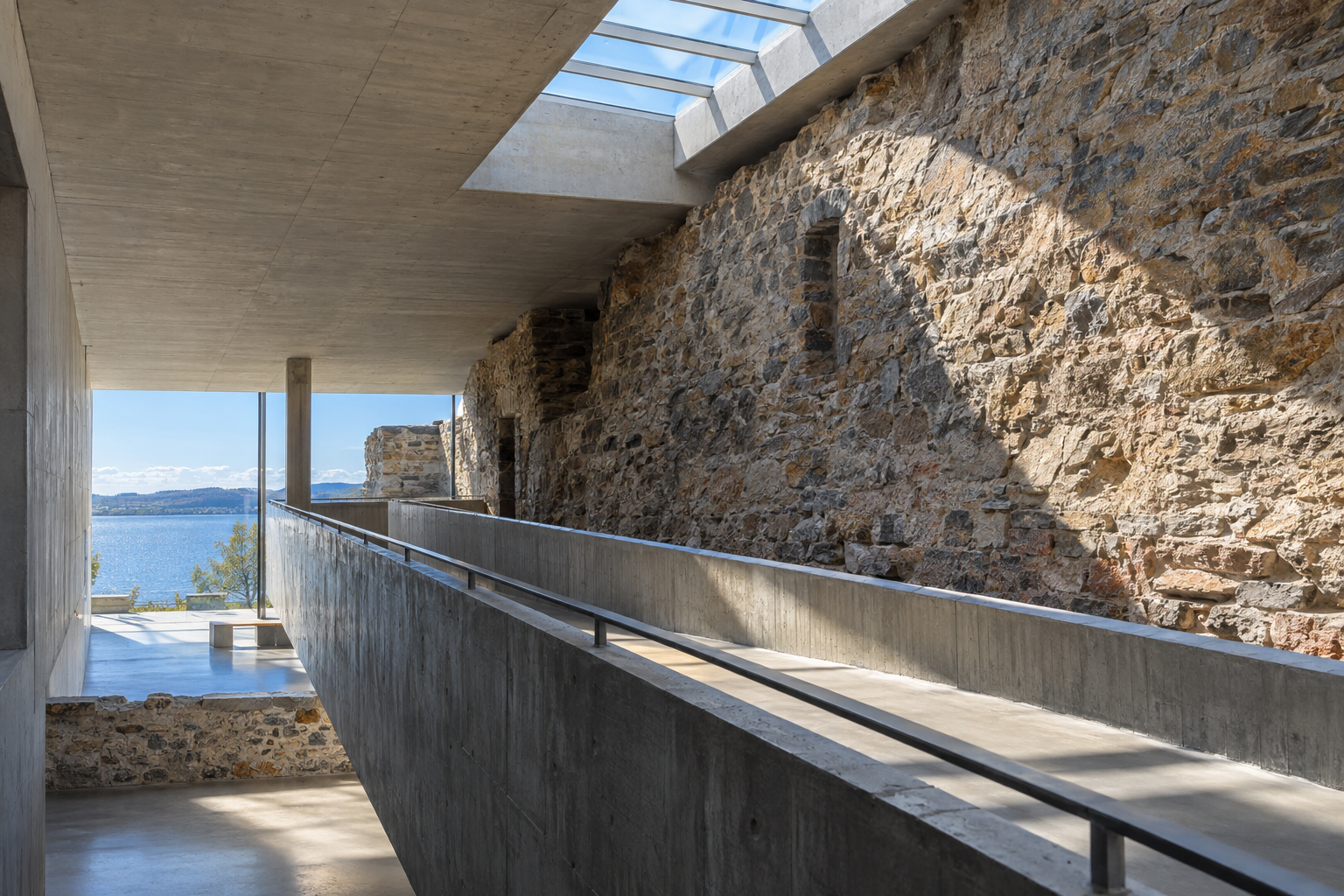
One of the most significant shifts in Alpine travel destinations for architects is the rise of the monolithic concrete structure. Unlike the skeletal frame of a traditional chalet, which relies on layers of insulation and cladding, modern Alpine buildings utilize thick, load-bearing walls. In the South Tyrol region, architects such as Peter Pichler and Armin Pedevilla have championed the use of 'black' or 'stone-infused' concrete.
This material choice is not merely aesthetic. At altitudes exceeding 1,500 meters, the diurnal temperature swing is extreme. Concrete provides the necessary thermal mass to absorb solar radiation during the day and radiate heat inward during the sub-zero nights. In the House am Moor by Pedevilla Architects, the use of pigmented concrete mixed with local aggregates allows the building to harmonize with the surrounding scree while providing an airtight, thermally efficient envelope that requires minimal mechanical intervention.
Topographical Integration
A primary logic of modern Alpine design is the engagement with the slope. Traditional buildings often sat 'on' the land; contemporary structures are frequently 'of' the land. By embedding a building into the mountainside, architects utilize the earth as natural insulation. This 'cave logic' reduces the surface area exposed to high-velocity winds and drifting snow.
Travelers visiting the Therme Vals by Peter Zumthor experience this logic firsthand. The structure is built into the hillside, using layers of locally quarried Valser quartzite. The building does not compete with the mountain's scale; it adopts its weight. This subterranean approach allows for a controlled interior climate and a sensory experience defined by shadow and stone rather than the expansive glass curtain walls found in lower-altitude urban contexts.
Material Sourcing and Sustainability
The logistics of Alpine construction demand a localized approach. Transporting prefabricated materials up narrow, winding mountain passes is carbon-intensive and expensive. The new Alpine logic emphasizes 'site-specific materials.' This includes using timber from the immediate forest and stone from the excavation site.
In the Grisons, the use of larch and pine remains prevalent, but the application has changed. Instead of ornamental carving, timber is used in its raw, massive form. This creates a tactile connection to the landscape. Sustainability in this context is defined by longevity. If a building is designed to last 200 years through harsh winter cycles, its embodied carbon footprint is significantly lower than a contemporary structure that requires frequent maintenance and material replacement.
In Short
- Thermal Logic: Shift from lightweight timber shells to high-mass monolithic concrete and stone.
- Geological Context: Buildings are designed to mimic or extend the existing topography rather than sit as objects upon it.
- Regional Hubs: South Tyrol (Italy) and the Grisons (Switzerland) are the primary centers for this architectural evolution.
- Durability: Focus on extreme-weather resilience and the use of site-excavated materials to reduce logistical carbon costs.
ARCHITECTT Note
The shift toward tectonic permanence in the Alps is more than a stylistic trend; it is a necessary response to the climate crisis in one of Europe’s most vulnerable ecosystems. By moving away from the 'ski-resort' aesthetic and toward a logic of heavy mass and site integration, architects are creating a new vernacular that honors the harshness—not just the beauty—of the mountains. For the traveling architect, these structures offer a lesson in how material constraints can drive profound formal innovation.
FAQ
Why is concrete becoming more prevalent than wood in modern Alpine design?
While timber remains an Alpine staple, contemporary architects often prefer concrete for its superior thermal mass, structural rigidity against snow loads, and resistance to the freeze-thaw cycles prevalent at high altitudes.
Which regions offer the best examples of contemporary Alpine logic?
South Tyrol (Südtirol) in Italy and the Grisons (Graubünden) in Switzerland are the primary hubs for this movement, featuring works by Peter Zumthor, Gion Caminada, and Pedevilla Architects.
How does thermal mass function in high-altitude architecture?
Thermal mass refers to a material's ability to absorb and store heat. In the mountains, thick stone or concrete walls absorb solar radiation during the day and release it slowly at night, reducing the need for active mechanical heating.
What role does site topography play in these designs?
Topography is the primary driver of form. Buildings are often partially embedded in the slope to utilize the earth’s insulating properties and to minimize the structural impact of wind and snow accumulation.
In Short
Alpine architecture is transitioning from timber nostalgia to monolithic, climate-adaptive stone and concrete structures.
Key takeaways
- —The shift from lightweight timber to heavy-duty thermal mass in Alpine construction.
- —Monolithic concrete as a contemporary response to the geological context of the mountains.
- —The integration of buildings into the topography to manage extreme climatic exposure.
- —A focus on durability and permanence over the ephemeral nature of historic chalet design.
Sources
- The use of 'black' or 'stone-infused' concrete by Pedevilla Architects in South Tyrol.See House am Moor and Fire Station in Viersch by Pedevilla Architects.
- Peter Zumthor's Therme Vals utilizes local quartzite in a monolithic, embedded structure.The Architecture of Peter Zumthor, various monographs.
Topics
Continue reading